
This article was originally published in Campaign.
The Omnicom shop was founded 30 years ago during a wave of independent media agency launches and has kept its unique, British character, despite becoming part of a global network – witness its role in handling the UK government’s £150m media buying account.
If 2018 was transformational for Manning Gottlieb OMD, when it won the government business, 2019 was a year of delivery. The agency increased revenue from existing clients (billings up 8% among the top 20 clients), retained one of its biggest accounts, Virgin Media, and demonstrated creativity and effectiveness in its work for brands including John Lewis Partnership, Sony Pictures and Uber Eats.
Annual billings soared 35% to £700m and staff numbers rose to 482 last year, chiefly because the government moved to the agency formally only in November 2018. Helping the government to build a bespoke supply-side platform to ensure “end-to-end” transparency in its programmatic buying was a striking innovation in 2019.
Last year brought a couple of notable wins worth £21m, including Allianz and (without a pitch) Pladis, the owner of McVitie’s, in partnership with sister creative shop TBWA. It is an alliance that underlines Manning Gottlieb OMD’s reputation for creativity in media. Client satisfaction scores rose for the sixth year in a row and staff churn fell to 18%, according to the agency, which boasts a stable management team.
OMD UK has moved into Omnicom’s Bankside headquarters in London, where Manning Gottlieb OMD is already based, but Omnicom insists no merger is planned.
The importance of investing in a distinctive culture with a unique selling point remains paramount in this category, as demonstrated here.
Judges said that they were impressed by Manning Gottlieb OMD’s revenue growth and focus on talent. “They started with their people and have delivered an innovative approach to ensuring they are fostering a culture of D&I. Some good examples of delivery for clients and delivering a 96% retention rate in the current climate is impressive,” one said.
Another added: “I love the ‘why can’t we?’ approach to businesses. Impressive growth, albeit much likely coming from the big HM government win. I love their focus on ensuring the culture was not harmed but would adapt in light of a lot of pressure and I’m sure a certain level of chaos as they bedded down a new, large client. Impressive results.”
Finalists
Essence US
MediaCom Hong Kong
Mindshare Hong Kong
Mindshare Indonesia
Zenith Taiwan
https://omnicommediagroup.com/wp-content/uploads/2020/06/MG-OMD_Global-Media-Agency-of-the-Year_Featured-Image_1600x900_01.png
This article was originally published by Warc.
In today’s current climate, there’s no denying that e-commerce is big business. Online retail is exploding in penetration and basket size as shoppers are choosing or forced to be isolated.
With this sharp rise in e-commerce, acquiring consumers’ attention has never been more challenging given there’s endless distractions available at a swipe of a finger. In this environment, brands are competing not just for consumers’ wallets, but for their minds. So, how can you grow your brand online in such a competitive landscape? And what will drive that growth; bringing in new to category buyers or improving frequency and basket value of existing customers? Let us explore this in more detail.
When analysing Byron Sharp’s book ‘How Brands Grow’, mental and physical availability are front and centre of his argument. Sharp believes that brands grow by reaching new customers, so marketers need to target as widely as possible and ensure that brands are readily accessible – both mentally and physically – in all buying situations. He argues that a key aspect of a brand’s success, particularly in increasingly competitive spaces, like online, is a brand’s ability to be mentally and physically available for consumers.
It could be argued however that e-commerce, much like shopper marketing, lies far more in physical availability – the breadth and depth of your distribution in time and space. For instance, any brand in a physical retailer would still need to consider how best to maximise value at the point of sale; how can they optimise towards the customer buying a bigger variant, such as a multi-pack, or additional products in a weekly shop. And loyalty schemes, such as subscription services, are an extension of this.
But when it comes to building brand loyalty, Sharp is critical, primarily because it is not a measure that advertising can impact; that frequency of purchase is symptomatic of penetration. He believes that most buyers will be light infrequent buyers. But even with this being true, it is not to say that innovative buying models, such as subscription services, aren’t valuable for those that might be heavy buyers. In reality, even they can be disloyal to a particular brand, so finding ways to lock consumers into a single brand for their category purchasing is still smart. And this, is just part of improving physical availability.
Coincidentally, as WARC has previously reported, the thrust of the Dirichlet laws (which describes variation in individuals’ loyalties across a category-buying group) is that brands compete primarily in terms of mental and physical availability, and this determines the brands that customers are loyal to. Market share will change if a brand secures additional mental and/or physical availability. This may come about as a result of superior marketing or through some innovation that leads to real changes in loyalties and, hence, brand growth.
So, what is mental availability? This is about priming a consumer to disproportionately favour your brand in a buying occasion. In ‘How Brands Grow Part 2’, Sharp and Romaniuk talk about the importance to focus on the consumer entry points or ‘need states’. These can be broken down into five categories:
- Why are you buying a product?
- When are you buying the product?
- Where are you buying the product?
- With whom are you with when buying the product?
- With what are you buying the product with?
In short, it’s about knowing what the most common (and less common) entry points are to your product category to then increase the mental availability for each one. To do this effectively in e-commerce, it is critical for brands to combine both direct and indirect selling channels. This can be through a combination of traditional omnichannel retail strategies as well as new models for growth such as voice, social and visual commerce.
Consequently, direct selling has never been more important for brands as it allows them to collect first party data, manage the brand experience and improve customer lifetime value (CLV). Indeed, we are increasingly seeing brands pivot into direct to consumer (DTC) selling to be able to flex their e-commerce model to customer changing behaviours. It also allows brands to effectively up and cross sell products to increase basket size and deliver incentives to encourage more frequent purchasing. PepsiCo in the US for example, has launched two DTC websites during the pandemic where shoppers can order an assortment of its food and beverage brands for themselves, or as gifts to friends and family.
In fact, Romaniuk and Sharp cite that online brand loyalty is possible because of a range of functional aspects of the online shopping environment. These include searchable brand lists, saveable shopping lists and baskets and automatic recommendations and decision aids that remind consumers of previous purchases and encourage repeat purchase.
Simultaneously however, the reliance on retailers is not going to disappear for selling online. As a result, brands need to be building sustainable partnerships with retailers, pure-players and marketplaces so that they can not only deliver commercial gains for the collaboration but can also co-fund performance media and marketing activity to entice consumers to buy their brand from that specific retailer.
With retailers’ digital shelf becoming so algorithmically driven, brands need to understand how both commercial and marketing factors affect their shelf ranking within the retailer’s digital shelf. Brands can collaborate using ‘clean rooms’ to access their platform and analyse the clickstream data to identify need states and shopper motivations.
And with research from Unliever suggesting that over 71% of online shoppers go directly to retailers like Amazon to start their shopping journeys, it is business critical to have access to these key data points, to manage the auction and ensure products are in the top three positions within a retailer’s listings.
At OMG Transact, we have evolved the proven concept of brand growth through mental and physical availability and now talk to clients about improving their digital availability to maximise the breadth and depth of their distribution in time and space online. The evolution exists as we see e-commerce requiring a true, data-led approach to understanding algorithmic shifts in shelf ranking, testing frameworks for improving visibility and unlocking insights around shopping behaviours. This in turn can fuel new to category acquisition as well as increase frequency and basket size for greater loyalty.
The balance between acquisition and loyalty will always be tricky. Brands therefore need to find the equilibrium of understanding their customer, motivations and need states whilst also being mindful of the value that a customer provides over their lifetime relationship.
By understanding the customer experience and measuring feedback at all key touchpoints, brands can start to understand the key drivers of CLV and really drive business growth online.
https://omnicommediagroup.com/wp-content/uploads/2020/06/eComm.jpg
The full article was originally published by Media Smart.
https://omnicommediagroup.com/wp-content/uploads/2020/06/Media-Smart-announcement_Header_1600x600_02.png
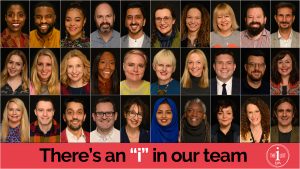
This article was originally published by the IPA.
The IPA has announced the 30 individuals who have made the inaugural IPA iList, in partnership with Unilever, for their game-changing dedication to improving the diversity and inclusivity of the industry.
These outstanding iList individuals are responsible for some of the most influential and wide-ranging diversity and inclusion initiatives in adland, from working to improve gender and ethnic minority equality, to raising awareness and understanding of mental health, neurodiversity, disability and social mobility, to helping to stamp out sexual harassment, to increasing the diverse representation – in all its forms – within the work itself, and much more.
The 30 iList members include:
- Afua Basoah, Vice President, Rabin Martin
- Phil Bartlett, MD, Global Inclusivity & Diversity, CDM London
- Sean Betts, MD, Annalect
- Victoria Brooks, Inclusions and Strategy Consultant, Freelance
- Michael Brown, Partner, Insight and Cross Culture, UM
- Dan Cullen-Shute, CEO, Creature
- Fernando Desouches, MD, New Macho (Perfect Storm)
- Asad Dhunna, Founder, The Unmistakables
- Akama Ediomi-Davies, Product Director, Xaxis/GroupM
- Serhat Ekinci, Managing Partner, Omnicom Media Group – Multicultural
- Karen Fraser, Co-Founder AdWorks
- Cindy Gallop, Founder, Make Love not Porn
- Sid Gordon, Creative Director, RAPP UK
- Jaki-Jo Hannan, Integrated Producer, adam&eveDDB
- Louise Johnson, CEO, FUSE
- Laura Jordan-Bambach, Chief Creative Officer, Grey London
- Sally Keane, Head of Sales, Marketing Solutions, LinkedIn
- Kelly Knight, HR Director, AMV BBDO
- Vicki Maguire, CCO, Havas London
- Hannah McCready, Comms Manager, The Specialist Works
- Andy Nairn, Founder, Lucky Generals
- Liz Nottingham, Former Executive Director Learning and Development, R/GA
- Sufia Parkar, Diversity and Engagement Director, McCann Worldgroup
- Xavier Rees, CEO, Havas London
- Amie Snow, Creative, Ogilvy
- Carolyn Stebbings, MD, SVP Data and Tech, Code Worldwide (part of the RAPP Group)
- Charmaine St John, Head of People, Fuse
- Rudi Symons, Former Global Head of Culture, GroupM Global
- Trevor Robinson OBE, Founder and ECD, Quiet Storm
- Sue Unerman, Chief Transformation Officer, MediaCom
Says Leila Siddiqi, Associate Director, Diversity, IPA: “These are the trail blazers – the exemplars – of how to get inclusivity right. We’d like you to not just celebrate them; but to take time to learn how they have improved inclusivity within their agency or company and apply this to yours. The iList announcement is very timely, we know that diversity makes business sense and we must not lose sight of our longer term vision for inclusivity during this period of restructure and cost saving. We look forward to sharing with you specific examples from individuals on the list, especially those who are positively reinforcing the inclusion agenda in a way that is relevant during the COVID-19 crisis.”
Says Karen Blackett OBE, WPP UK Country Manager and MediaCom Chairwoman UK & Ireland and iList Chair of Judges: “It has been an immense honour to be part of judging the inaugural iList. It has been humbling, at times emotional, but so inspiring to read their stories and to meet them in person. Collectively, they are changing our industry for the better and propelling us forward.”
Says Claire Beale, Global Editor-in-Chief. Campaign: “I’m so proud to be able to showcase and support all the committed and passionate people on this list. My hope now is that the iList becomes so much more than a back-patting exercise and is seen as a source of inspiration and learning; the people on this list are leading the way but we all need to follow if we are to truly shape the industry for the better.”
Says Aline Santos, EVP Global Marketing and Chief Diversity & Inclusion Officer, Unilever: “Congratulations to all the finalists! Unilever has been humbled and inspired to partner with the IPA on the iList. In this completely new world we need diverse leaders, problem solvers and people from all backgrounds to ensure our ‘new normal’ works for everyone and not just a few. Role models like the iList finalists will help to ensure our industry comes out the other side stronger and smarter.”
Says Sam Phillips, Chief Diversity & Inclusion Officer OMG UK + Chair, D&I Consultancy and iList Deputy Chair of Judges: “Deputy Chairing the inaugural iList was both joyful and insightful. To discover the untold stories of individuals and businesses in our firmament striving to make a difference across the Diversity and Inclusion spectrum was a delight. Thanks to the IPA, Campaign and Unilever for supporting these new awards and to my fellow judges for providing such wise counsel. To all who have been leading our industry’s D&I charge – thank you and keep it up – there’s much to celebrate but there was already a steep road ahead pre-pandemic and D&I chasms will likely grow without eyeballs and action continuing to be trained on this vital area in the months and years to come.”
Says Debbie Weekes-Bernard , Deputy Mayor for Social Integration, Social Mobility and Community Engagement: “We want every workplace in London to be diverse and inclusive. We know advertising is a powerful tool but too often the images we are presented with provide limited impressions of the people they portray.
“At a time when having a sense of belonging is more important than ever, these game-changers are helping ensure the advertising industry, and the advertising they create, becomes not only more representative, but increasingly inclusive and truly diverse.”
This article was originally published by Campaign.
Paul Knight is chief executive of OmniGov, the specialist unit in Manning Gottlieb OMD that has looked after the UK government’s media buying since 2018.
He explains the challenges of managing the media buying part of the government’s comms during the coronavirus crisis in the glare of public scrutiny and how it is leading to new and better ways of working as part of Campaign‘s “Leadership in lockdown” series.
Where are you spending quarantine and how do you run your day?
I live with my wife and three children in West Sussex and, on the advice of many people who have previously worked from home, we have tried to maintain some sort of routine throughout this period.
The mornings usually consist of printing out homework, setting up computers and ensuring everyone has what they need for the day ahead. One of the benefits of lockdown has meant we have spent lunchtimes and dinners together as family – as well as the occasional Joe Wicks session in the mornings.
My working week includes trips to the Cabinet Office in Whitehall, which has made this period harder to manage, but these visits are vital to the success of the government’s plans.
What were the biggest adjustments that you had to make in the first few weeks in terms of your work, your team and your clients/external partners?
Government communications have never been busier and working remotely brings additional challenges which don’t just include dodgy Wi-Fi.
Assembling additional teams at pace has been a necessary requirement, reflecting the different elements, scale and breadth of the campaigns we have been communicating. Our people have been fantastic throughout and stepped up to a challenge none of us could have expected. This includes the wider agency and those we have drafted in for support.
The days spent with other agencies at Cabinet Office have also been incredibly productive. Quick conversations and socially distanced meetings have meant we can get things agreed and implemented at pace, when it’s never been more important.
The speed at which we are moving has highlighted that meetings we would normally have in an office can easily be cut by up to 50% and still be as productive. This has been a positive and, when we slowly start returning to normal, this is something that could, and should, continue.
What has been the hardest part and what has been the most uplifting part of lockdown?
If I were to summarise the past two months, I would say complexity and scrutiny has been the hardest part, whilst collaboration has been the most uplifting.
Complexity to a level I have never seen before – multiple messages and policy changes on a daily basis, the turnaround times we have worked to and the different ways of working we have had to adopt with different government stakeholders and departments. Also, the scrutiny that comes with government communications is even more in the spotlight and the outcomes of these campaigns really do make a difference, so effectiveness has to be our driving factor.
Collaboration has highlighted the real strength within our industry. Not only across our OmniGov team in MG OMD, but also working with multiple media partners. It has been difficult at times as we haven’t been allowed to discuss policy details, but the generosity and goodwill of the industry in supporting key communications (particularly for the NHS) has been inspiring.
An inspirational example of collaboration in this time was the coming together of the UK publishing industry across hundreds of titles. This “virtual” agency, across media, PR, creative, partnerships and insight, has been regularly brought together within Cabinet Office to help navigate the pace and agility of the activity over the past two months.
What are you working on?
A large part of my time has been taken up on the Covid-19 campaign. The past weeks have been a challenge and many a weekend has been taken up with urgent calls or policy updates. Every day has presented different challenges, such as:
- Ensuring multiple messages are landed at the right time, such as self-isolation, symptoms or handwashing
- Replanning on a weekly basis to accommodate different policies, such as the devolved nations that have extended their stay-at-home guidelines
- Focusing on how we are using insight to inform our approach, such as daily polling, compliant and vulnerable audience data and campaign econometrics
- Ensuring effectiveness data is reviewed, distilled and regularly fed back into the team for planning and buying optimisation
Alongside this, we have many government departments that are now making plans for the next few months, so the challenge has been to ensure we have the right level of resource across the team to be able to manage workloads and maintain the level of service we had been delivering before lockdown. All areas of our business have been fantastic in stepping up to the challenges and have highlighted the real strengths of our agency.
How do you find inspiration?
Being at the centre of such a challenging situation for our country, it has struck me how everyone in the UK has pulled together as we try to get back to some sort of normal. There are inspirational stories across every part of our society, such as Colonel Tom, keeping families healthy with the help of Joe Wicks or the Thursday night clap for carers to show our huge admiration for the front-line workers.
Inspiration has also come from the great work the team are doing at speed. It’s so inspiring to work with such talented individuals.
Has the experience taught you something that you’ll change when you get back to working from an office?
We have proved how connected we can be, even if we aren’t together. As much as I miss the face-to-face interactions, the technology has been a big success. Used in the right way, it can be a benefit to our working life.
Virtual company meetings and conferences have increased inclusivity and more regular check-ins with teams has been a real positive. These will be crucial as we slowly ease back into office working. The past two months have shown me how everyone adapts in different ways.
What change do you expect to see in the industry when this is over?
My biggest challenge to the industry is what our new normal looks like when this is over. I think our working patterns could change; we have proved that remote working, in the right measures, can be a success. We have proved how resilient we are.
Also, the speed at which we have implemented highly effective campaigns also demonstrates to me the true potential our industry has if we work even closer together – across all sectors.
As I write this, we are moving into our new “Stay alert” phase and slowly businesses are starting to reopen their doors. We must pay attention to the rate of infection, but if everyone continues to follow the guidance, I am confident we will come back even stronger.
https://omnicommediagroup.com/wp-content/uploads/2020/05/Paul_Knight_Header_1600x600.jpg
Omnicom Media Group and PHD has won Diageo’s global media planning and buying account.
Isabel Massey, global media director at drinks giant Diageo, said OMG will be “our media agency of record” and PHD will be “our strategic media lead”.
Massey added: “PHD presented us with access to standout media talent from across Omnicom Media Group, strategic thinking and expertise around the world, underpinned by Omni, the group’s proprietary software solution, that will complement our own breakthrough marketing effectiveness tool, Marketing Catalyst.”
Diageo, the owner of Guinness, Johnnie Walker, Smirnoff and Tanqueray, expects the transition to PHD and Omnicom Media Group to happen by around July, in time for the start of its new financial year.
The drinks company is one of the world’s biggest advertisers and is thought to spend upwards of £500m a year on paid media, with a reputation for investing in its brands, rather than cost-cutting.
Diageo’s biggest market is North America, which generates 35% of its net sales. Europe represents 23%, Asia-Pacific 21%, Africa 12% and Latin America and the Caribbean 9%.
The full article was authored by Gideon Spanier and originally published in Campaignlive.co.uk.
https://omnicommediagroup.com/wp-content/uploads/2020/05/Diaego_win_Header_1600x600.jpg
This article was originally published in Campaign.
Manning Gottlieb OMD has been named Campaign Agency of the Year for the second consecutive year.
This was a well-contested, high-scoring category with a lot of entrants, and the judges found it difficult to reduce the shortlist to eight contenders. Several agencies performed well in the first round of judging and only narrowly missed making the cut.
The high standard of entries suggests there is good reason to be optimistic about the future of media agencies – this is despite the UK sector going through the greatest disruption in a generation as a string of homegrown performance shops have shot to prominence in the past 12 months. So it is fitting that Manning Gottlieb OMD has been crowned the best media agency for the second year in a row.
The Omnicom shop was founded 30 years ago during a wave of independent media agency launches and has kept its unique, British character, despite becoming part of a global network – witness its role in handling the UK government’s £150m media-buying account.
If 2018 was transformational for Manning Gottlieb OMD, when it won the government business, 2019 was a year of delivery. The judges were impressed by how the agency increased revenues from existing clients (billings up 8% among the top 20 clients), retained one of its biggest accounts, Virgin Media (pictured, above), and demonstrated “lots of evidence of creativity and effectiveness” in its work for clients such as John Lewis Partnership, Sony Pictures and Uber Eats.
Annual billings soared 35% to £700m and staff numbers rose to 482 last year, chiefly because the UK government moved to the agency formally only in November 2018. Helping the government to build a bespoke supply-side platform to ensure “end-to-end” transparency in its programmatic buying was a striking innovation in 2019.
Last year brought a couple of notable wins worth £21m, including Allianz and (without a pitch) Pladis, the owner of McVitie’s biscuits, in partnership with sister creative shop TBWA. It is an alliance that underlines Manning Gottlieb OMD’s reputation for creativity in media. Client satisfaction scores rose for the sixth year in a row and staff churn fell to 18%, according to the agency, which boasts a stable management team.
Tim Pearson, its chief executive, who was promoted to chief executive of parent company OMD Group UK in July 2019, and Paddy Adams, chief strategy officer, have both been shortlisted elsewhere in these awards for media agency head and media planner respectively.
Manning Gottlieb OMD’s bench strength, which includes Natalie Bell, managing director, and Paul Knight, head of government arm OmniGOV, was also in evidence when it won Agency of the Year at the Media Week Awards 2019.
However, the judges felt Manning Gottlieb OMD’s continued prosperity was “not to be under-estimated” at a time when some of Omnicom’s global rivals have been struggling to justify the existence of UK-only shops.
It remains to be seen what happens to Manning Gottlieb OMD’s identity in the coming year and beyond, because Pearson has added responsibility for OMD UK, which was also shortlisted for this award; he is now chief executive of both agencies.
OMD UK has moved into Omnicom’s Bankside HQ in London, where Manning Gottlieb OMD is already based, but Omnicom insists no merger is planned.
The importance of investing in a distinctive culture with a USP remains paramount in this category, as demonstrated here. It was, then, “another great year” for Manning Gottlieb OMD, the judges felt.
https://omnicommediagroup.com/wp-content/uploads/2020/05/MGOMD_AgencyOfTheYear_Header_1600x600.jpg
This article was originally published by Econsultancy.
Gemma Spence is CEO at OMG Transact, Omnicom Media Group’s ecommerce specialist practice.
The UK is the world’s third largest ecommerce market behind China and the US, accounting for $101bn in 2019 alone.
But Amazon holds almost 40% of the European market and more credit card details than any other company on earth which makes their data and shopper-led approach more personalized and tailored than the rest.
Therefore, to be able to compete on a level playing field, companies must use technology to enhance their logistics, seamlessly combining offline assets such as stores and supply chain with online front-ends such as apps, webstores and media. Having a well-oiled omnichannel approach to services is key and will likely result in a refreshed business model with growing sales.
So, here is your 7-point survival guide to ecommerce in 2020.
1. Align your ecommerce approach with wider business objectives
Start by defining your ecommerce goals based on your wider business objectives. If your key focus is around growing distribution and volume, then operating through retail partners or distributors will be critical for success.
If you are more focused on owning the whole end-to-end consumer experience coupled with higher margins, then a direct to consumer (DTC) approach would be more fitting.
In some cases, a combination across direct and indirect can work but, for this, a focus on category and portfolio management is key. Nike is a good example of a brand that effectively splits its portfolio across brand.com and retailers, with its higher margin lines exclusive to its own brand platform and lower margin, volume driving lines also available on retailers. Andy Campion, Nike’s CFO said in an earnings call in 2017 that fulfilling demand through Nike.com generates nearly twice the revenue and significantly higher margin on each transaction than through the wholesale model.
2. Build your combined approach through insights around your core audience
Always start with your portfolio and the core audience you want to target. Based on whether you are selling direct through your own website or indirect through retail sites, it will be important to align your audience with identified core shopper profiles.
From this, you can build out affinity categories and audiences in order to up-sell and cross-sell. For example, if you are selling high end vacuum cleaners and you know your audience is likely to be home owners, try targeting audiences that are in the market for home care products. Clear separation and guardrails around audience and media channels is key to avoid any cannibalisation or cost inflation.
3. Build a balanced investment plan to help you reach your sales potential
Depending on your routes to market and your trading channels, it’s key to develop both a top-down and bottom-up investment plan that underpins your financial and sales targets.
Using your portfolio to sell direct and indirect, you can combine your average transactional value (ATV) and historical sales data, to model out the investment and promotions required to achieve your sales and revenue targets.
4. Build a channel-wide and retailer-specific media and merchandising plan
The growth of ecommerce means brands need to develop future-facing marketing and media strategies to stay ahead. Partnering with retailers through mutually beneficial agreements is key to maximizing visibility with cost savings attached. Having a fully-integrated marketing plan will ensure that your brands’ promotions and activations are aligned and factored within the retailer calendar, including events such as Black Friday or Prime Day.
5. Get your retail hygiene in order
Are you set up for success? Before starting with any activation, it is important to audit your retail health to make sure you have operational excellence in place to fulfill the orders quickly.
It is also important to look at the elements that are important to both you and the retailer.com such as repeat out of stocks or lost buy box which are essential for maintaining sales effectiveness.
6. Optimize your content
A critical component for ecommerce success comes from the content you have in place, covering both functional and inspirational content. Retailers all have very specific algorithms that look at both commercial and relevancy factors when weighting and ranking products within their search results page.
From a product detail page perspective, it is important to make sure that all your content is feature- and benefit-led. It needs to be optimized using keywords that shoppers use to discover your products based on the algorithm in place for the retailer. It should have simple hero images and pack shots with integrated rating and reviews to provide an additional level of trust.
For higher transactional products, it is important to provide richer content to help guide the up-sell and cross-sell as well as give that additional layer of information for larger value goods. For example, video can be crucial, with research from Hubspot indicating that consumers who watch product videos are 79% more likely to purchase.
7. Layer on biddable and co-funded media to convert the shopper
Once all these fundamentals are in place, you can start running biddable media solutions to drive purchases across core and affinity categories. By developing an audience and seasonal-based approach that draws on promotions that are running both in store and online, you can improve conversion dramatically both from repeat purchase customers and attracting entirely new shoppers.
Samsung for example, effectively leveraged co-funded media to convert the shopper. The brand needed to cut through a competitive, cluttered media landscape to drive awareness of its Galaxy S8 smartphone in five EU countries. By leveraging the multiple touchpoints across Amazon, Samsung was able to reach potential customers in a holistic, cross-screen campaign with custom elements. Amazon, for example, offered the smartphone via a special midnight delivery with Prime Now. It also reached a large audience through homepage takeover, Amazon Fire Tablet and Fire TV devices, programmatic in-stream video, a campaign landing page and accompanying cross-screen media on and off Amazon. The campaign resulted in 665 million impressions across mobile, desktop, Fire TV and Fire Tablet and drove a ROAS of €6.35, more than 2.5 times higher than its EU benchmark.
In 2020, a brand’s success in ecommerce will be the consequence of getting all the little things right beforehand, be it back-end logistics, knowing your customer and your overall approach to market. It’s truly integrated, it’s your retail DNA. It’s old school, in terms of getting the basics right and new school, by staying flexible enough to adapt to changing consumer behaviors and market trends.
https://omnicommediagroup.com/wp-content/uploads/2020/02/ecommerce.jpg
Traditionally Blue Monday, 20 January, is the most depressing day of the year. To combat the Monday blues, Sean Betts, Managing Director at Annalect UK, shares his tips to help keep a positive mindset on Blue Monday and beyond.
1. Lower your expectations of yourself
All too often we are our own worst critics; setting goals and resolutions for a new year is a great motivator, but don’t let those goals turn into beating sticks if you fall short. Be supportive of yourself.
2. Keep it simple
January can be a stressful month so look at ways to keep your life simple. Don’t say yes to things you don’t want to do and practise honesty with your family and friends so they know how you are truly feeling. You will feel more connected and closer to them through this honesty.
3. Do something for someone else
There’s a growing body of research that links altruistic behaviour with improved health and a greater sense of wellbeing. Offer someone a genuine compliment, and/or make a contribution to a charity.
4. Smile
When you smile, you release a cascade of feel-good chemicals in your brain. Your body relaxes, and blood pressure may be lowered. Smiling is contagious, too, so if you smile at others you’ll help them feel better as well.
5. Be grateful
It can be so easy to forget the things in our lives we have to be grateful for, especially in a month like January. Actively thinking of things we are grateful for can transform a glass empty kind of moment into a glass full kind of moment. It can help add a little bit of perspective when we need it most.
6. Socialise
Making plans to do things you enjoy or just seeing friends is a great way of boosting your overall wellbeing and happiness.
7. Get outdoors
Natural light helps stabilise serotonin and triggers endorphin, both mood-boosting hormones. See if you can get outside for at least ten minutes today. You could enhance the positive effects by combining your time outside with the second suggestion.
8. Practise mindfullness or meditation
The only wrong way to meditate is to not do it at all, so why not give it a go? Taking the time to sit still with yourself – however busy or calm your head chatter is – is proven to have a multitude of benefits on your mental health. Just like your body needs attention and exercise, so does your mind.
9. Get on with it
What we need to do and what we want to do can feel very conflicting. Nine times out of ten, the best action to take can feel the most counter-intuitive. Get up, get dressed and fake it ’til you make it! This can work in helping lift our mood. Where the body leads the mind follows. So get going and gently put one foot in front of the other.
10. Reach out
It might be a shiny new year but that thing that has been playing on your mind, or keeping you up at night won’t have magically disappeared because it’s now 2020. If you feel like you need it, be brave and get some support. Don’t suffer in silence, get some help!
https://omnicommediagroup.com/wp-content/uploads/2020/01/Blue_Monday_header_1600x600.png
As part of our continued efforts to uphold the best in class industry standards, Omnicom Media Group UK is delighted to hold the IAB Gold Standard 1.0 and is in the process of re-certifying for the IAB Gold Standard 1.1.
As an organisation, Omnicom Media Group UK is a great supporter of all the work the IAB does driving even greater industry standards.
IAB Gold Standard
The Gold Standard initiative is an important framework to define a more robust digital ecosystem, giving clients, publishers, technologies and buyers increased reassurance and certainty throughout the digital media buying process. Our partnership with the IAB forms a key foundation within our digital best practice approach, which delivers market leading solutions for clients.
We are excited to partner with the IAB to continue to develop the Gold Standard in 2020 and beyond.
Omnicom Media Group UK supports Coalition for Better Ads
Omnicom Media Group UK supports the Coalition for Better Ads in its mission to improve the online advertising experience for consumers and promote adoption of the Better Ads Standards. As a result, the lowest ranking ad experiences are not compliant in our creative strategy.
Omnicom Media Group UK supports the IAB Initiative Ads.txt
Omnicom Media Group UK supports the IAB initiative ads.txt (also known as Authorized Digital Sellers). Where an ads.txt file is present, Omnicom Media Group UK requires that only publisher inventory from authorized sellers is purchased. In the absence of an ads.txt file Omnicom Media Group UK is actively working with publishers to implement ads.txt on their sites to ensure they support the Gold Standard Initiative.
https://omnicommediagroup.com/wp-content/uploads/2020/01/IAB_Header_1600x600_FINAL.png