
Not long ago I was reading an eye-catching LinkedIn post from an old colleague of mine that highlighted three truisms of marketing: the basic concepts come from ancient civilisation; the discipline was born around the end of the year 800; the competencies are reshuffled every 10 years.
The first two points helped to highlight the third, which shows just how quickly things are now changing.
It’s hard to disagree with that, especially looking at the digital landscape of the last few years; do you remember the first display banner ever published online? The medal goes to AT&T, publishing a black banner on HotWired.com in 1994, bearing the words, “Have you ever clicked your mouse right here? You will.”
The mind boggles to remember that the click-through rate (percentage of clicks over-served ads) was above 45 per cent. This experiment proved the capabilities of generating brand awareness and driving interest (traffic was still a new and overlooked metric).
Today, digital services have multiplied, diversified and specialised. Global spending on digital advertising has been growing between 3 per cent and 11 per cent year-on-year. Across social media, video, search (paid and organic), affiliates etc. there are now full multiple-funnel solutions for all industries looking to connect with their consumers across the new and emerging touchpoints. As a result, the single person that launched a banner in 1994 is replaced by an army of highly skilled technical specialists.
Fast-forward 25 years and it is increasingly evident that digital can power a business in multiple ways, far beyond the humble banner or even traditional media or marketing functions.
But this comes with its own set of challenges. Mostly in actual network costs and talents. Compared with planning and activating traditional media, digital marketing and transformation initiatives tend to be more work-intensive; the daily interactions and tasks required to ensure campaigns are launched and constantly optimised in such a fast-paced environment are significant. The required skillsets have become more and more technical. And in many cases, the line between marketers and data scientists are blurred. When done well, data and technology merge to create the best-in-class user experience, designed to engage with people at all possible levels and power business transformation and growth.
As a result, media agencies are required to be more knowledgeable and agile than ever. And the change in working habits, accelerated by Covid-19, has helped to further develop decentralised and remote working as effective ways to reach previously untapped talents and skillsets. The legacy approach of having an entire team in one place is not only now debatable but also challenged from a financial standpoint by clients looking to optimise costs.
So, with access to global talent pools at the other end of a video call, remote offices (both off- and nearshore) and increasing reality, freelancers and the new agile skill sets they offer have never been as important as they are now.
At PHD, ‘Shift’ is our focus. As an industry, it is important that we try and get ahead of the change – and stop just responding to it. To think longer-term. To start building the future, today.
The simple truth is we keep reinventing and questioning ourselves. Not a single day passes without adding something new into the mix.
In our latest publication, titled Shift, we have explored the impact of these new challenges in the digital space on our talent. What are the skillsets of the future? Where will they be based? How will they be identified, developed, and empowered to succeed for our clients and their businesses?
We identified four cultural habits that are essential for answering these questions:
1. Hire for tomorrow (increase diversity, opening the filter on the talent acquisition process).
2. Encourage greater understanding of innate strengths (enable people to get into optimal swim lanes).
3. Set people free (empowered people empower people; develop a culture of empowerment and coaching).
4. Become a learning institution (that also happens to be a business). Einstein is reputed to have said: “Learning is experience. Everything else is just information.”
In such a decentralised world, connected but so disconnected at the same time, it’s imperative to protect and nurture the company’s culture, this is where becoming a learning institution is an absolute must: a culture is the sum total of thousands of small learnings, applied on a daily basis.
Or, as Steve Jobs said, “Innovation is the ability see change as an opportunity – not a threat.”
To learn more about PHD’s publication Shift, visit shiftbyphd.com.
This article was first published in Campaign Middle East
Social media. This could mean a million and one things depending on who you speak to, but the one thing that it cannot seem to escape is controversy. Whether it’s accountability in the wake of the Capitol riots, disruption to traditional media outlets or addressing the safety of younger users, social media has been a magnet for criticism and interrogation. However, the controversy surrounding social media in the past few years has done nothing to curtail its growth. With TikTok hitting 1 billion monthly active users, Twitch revenue crossing $2bn and Meta claiming ownership of four of the top six apps globally, it’s safe to say that the broad category we’ve labelled as ‘social media’ is only continuing to expand. eMarketer reports a continued increase in time spent online in 2021, with no decline in usage reported for any of the major social platforms.
In fact, we have seen new entrants to the field grow at an unprecedented pace. This should come as no surprise. Successful players in the space are recognising that whatever we do online, it’s more engaging when you add a layer of human interaction. The smartest advertisers are the ones who are recognising that fact and taking advantage of the new opportunities presented. So, in planning your social media investment, what do you need to do?
Let’s not talk about social media: Forget the concept of ‘social media’ as a portion of your ‘digital’ budget, and plan around your consumer. The ways that people interact with an influencer on Twitch, or share movie trailers and video essays on YouTube, could not be more different. It’s time to think about consumer mindsets. Are you looking for deep engagement in a lean-forward environment with users that are in the mindset to discover new things? Turn to Twitter or Facebook feeds. Are you looking to build brand recall with users who are in the mood for TV-style lean-back entertainment? Check out Snapchat Discover or YouTube. Consider what mental state you want your consumers in (and please, let’s stop repurposing the same TVC for both YouTube bumpers and Facebook lead-gen ads).
Look to holistic measurement: Given the overwhelming narrative of digital measurability, we’ve come to expect that we can map every dollar of spend to the bottom line. Tools like store visitation and offline conversions claim to bridge the gap between digital and physical presence. Realistically, most of these solutions are indicative at best, with quite significant blind spots. Taking this data as fact can lead marketers down the wrong path entirely. So what’s the solution? Look to marketing mix modelling, which has long been one of the best ways to measure the impact of media on revenue, and brand lift studies, which are an essential tool in understanding the building of a brand. What they have in common is the ability to view social media as part of a greater whole and its impact on a digital generation.
Build beyond the platform: While it is tempting to believe that the big tech players know best, the reality is that there are a number of bright start-ups and established businesses who have found ways to improve on what the Pages and Zuckerbergs of the world have built. It’s worth exploring some of the options that companies like Smartly.io, 4C, Skai and others have to offer. In a lot of cases, these companies will provide specialised solutions that can help to massively improve performance or provide a different perspective. One great example of this is attention measurement as a replacement for video views – 2-second and 3-second video views have long been one of the most controversial metrics in digital media. Attention measurement bridges that gap by looking at factors outside of just continuous view time to understand just how much impact your video advertising is having. This is a great example of a step that digital media needs to be taking in order to build robust yet flexible measurement frameworks.
In short, while social media may be drawing the wrong kind of attention in some circles, its growth has not been dampened at all. In fact, doors have even opened for new entrants in what many assumed to be a saturated market, and the digital platforms that we have labelled as social media have grown to take over more and more of our day-to-day lives. Good digital marketers will be finding ways to leverage the measurement capabilities of social platforms in order to drive solid return on investment. Great digital marketers will recognise that social media as a concept is too all-encompassing to be useful – it is integrated into every aspect of our lives, deserving much more of our attention than just a simple label.
This article was first published in Campaign Middle East
Elie Khouri, Chairman & CEO of Omnicom Media Group MENA, shares his 2021 industry predictions for the region following a year of unparalleled unpredictability.

“The only thing we can safely predict is unpredictability,” was possibly my most accurate prediction last year. Unfortunately. Who could have anticipated the global pandemic and the depth of its impact on the way we live and work? Normal business was temporarily put on hold while we were busy discerning what the ‘new normal’ might look like. Once the health emergency created by Covid is under control, we’ll find that most of the issues raised last year will still be relevant next year.
With one key differentiator: Covid. The outbreak of the pandemic has acted as a time warp. The slowdown resulting from the lockdowns has actually added urgency to existing plans for the digitization of business and marketing. Covid has forced people and brands to meet virtually. These digital brand experiences are now going right through the funnel and end with online transactions for a growing number of sectors and companies. Who thought we’d buy cars online or take virtual vacations? Estimates for the growth of e-commerce in the region in 2020 range between 100% and 150% but the trend is clear and not limited to retail. Governments and the B2B sector are actively involved too. New digital habits are being formed and shopping and consumption patterns are being profoundly altered. More than half of UAE and Saudi residents state they will stick with their new shopping behaviors after the pandemic.
As more of the marketing budgets are going into digital infrastructure, analytics and performance or data-driven campaigns, investments in media continue to shift towards global platforms. This leaves the whole industry exposed and exerts incredible pressure on local media owners. We expect 2020 to have fallen by 20% in media investments, double the 10.2% estimate for the world’s average. The UAE was particularly affected, reliant as the country is on tourism and retail, while Egypt was relatively spared. This will force media and agencies to accelerate the transformation of their business models and diversification of their revenues. On the upside, 2021 should see the region’s first year of growth since 2014, with an anticipated 10% rise. A full recovery to 2019 levels will happen in early 2023.
Governments will play a major role in restarting the economic engine. Saudi Arabia’s Vision 2030 will continue unabated, with its focus on tourism and entertainment, including the first Saudi F1 GP. The UAE will stage its rescheduled Expo 2020. The resumption of talks between Qatar and its GCC neighbors, which could see sanctions lifted, will boost confidence and trade in the region. 2021 promises to be an eventful year, and for the better. Take an inside look at the 10 key trends that will reshape the marketing industry next year.
1- Will TV rise again? The fortunes of the region’s broadcasters are changing. Once the darling of consumer brands, TV now has to fight harder against digital platforms for its place in media plans. TV ad revenues will have shrunk to $450 million in the GCC by end of 2020. The continued lack of reliable and accurate audience measurement (especially TV meters) does little to inspire confidence, depressing CPMs to rock-bottom levels. Though still the leader, MBC will seek to address a significant fall in its revenues, from more than $800 million in 2015 to less than $300 million in 2020. The recently launched in-house sales agency, MMS, which is now fully Saudi owned and managed, will face an uphill battle to reverse the trend. The new leadership, albeit solid and credible, will have to stave off talks of monopolistic practices driven by MMS’ partnership with the Kingdom’s leading out-of-home provider. This will add to the challenges facing a struggling sector that has already paid an unfairly high price from recent political and economic events.
The future of broadcast TV in MENA rests on the industry’s ability to inspire confidence in its grip over audiences and MMS’ new commercial policy. Despite being one of the cheapest TV landscapes in the world, the last thing the Covid-hit market needs is further price instability and inflationary pressures.
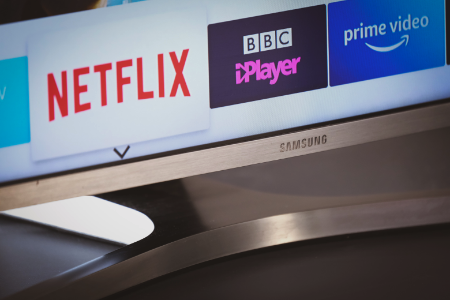
2- The streaming battle heats up. While linear TV audiences continue to dwindle, existing streaming platforms such as Shahid, Awaan, Starzplay, OSN, Netflix, Apple TV+ and Amazon Prime Video are gaining subscribers and, with their investments in content, will continue to grow and dominate over time. SVOD (subscription video on demand) will see growth accelerating, adding 30% next year, while AVOD (advertising video on demand) will grow more slowly at 15%.
The key differentiator will be Arabic content. Shahid VIP, which claims to have gained over one million subscribers in just six months, has 42% of its content locally produced in Arabic. OSN Originals is aiming for 25% next year. Despite recent efforts, Netflix achieves only 1%. This is what people will pay money for, especially younger audiences, offering TV content providers a viable alternative to the advertising-funded linear model.
3- Digital will reach 65% share of total marketing spend. Despite concerns about and efforts to control the influence of the big 4 (GAFA) in politics and society, the weight of digital in advertising investments keeps growing. Next year, it will reach 65% in MENA. Data is at the heart of this growth, turning precision into performance and profitability. The dominance of digital platforms will be exacerbated long term by their diversification from an advertising-funded model to one including e-commerce, cloud services, content, etc. The introduction of 5G will surely help fuel this growth.
Meanwhile, the two dominant forces, Facebook and Google, are starting to feel the heat of competition as their growth slowed in 2020. The challenge from Snapchat is strengthening everywhere, as the platform is expected to grow from north of $200 million in revenues in 2020 to close to $300 million next year. Still small compared with the +$3.0 billion for Facebook and Google combined, but the trend is telling given its strong advantage especially in Saudi Arabia, where it holds a 12-15% market share. TikTok is growing fast thanks to content diversification and is poised to reach $100 million in 2021. Amazon remains the smallest player, from an ad-tech point of view, until it rapidly scales up its marketplace and ad solutions which are planned to roll out across the UAE, KSA and Egypt with the promise to be in the top 5 by 2022.
Net net and what most observers miss is that more than $3 of the $5.5 billion MENA investments end up outside the region, after accounting for operational costs related to the running of the big ad tech players.
4- The best is yet to come for e-commerce. Think of 2020 as a dress rehearsal for what’s coming in 2021 in terms of e-commerce. The increase in both demand and supply will only accelerate next year, making MENA the second-fastest-growing market after China. One sign of this is Amazon increasing its regional workforce by 30%. Several concurrent developments are also leading to this. There are significant investments in our e-commerce infrastructure, led and supported by government initiatives. The offering in terms of products, pricing and service, such as delivery speeds, will continue to improve. As well as strengthening regional giants, this will attract new e-tailers and entrepreneurs. Shopping habits will also continue to turn digital, with half of MENA consumers stating their behaviors will not change post-Covid. 49% of global product searches are occurring on Amazon, against 22% on Google; e-commerce is now an essential first stop for product discovery. The experience borne out of necessity is breaking down any previous resistance. In 2021, this will only increase with social and mobile commerce, instant deliveries and digital payments.
5- Clients will continue to favor “Performance” over “Branding”. Following the impact of Covid, the emphasis on “Performance-driven” campaigns vs “Branding” will intensify in an attempt to meet targets. This is particularly true for the most impacted sectors of automotive, travel and hospitality. In 2021, we will see CMOs further transforming their marketing strategies towards always-on, data-driven approaches based on a single view of existing and potential customers. Loyalty programs will be particularly key in this. Unifying first-party data, enriching it with other data layers before activating it for greater precision and performance is a far cry from past marketing practices. While some are in-housing their data function, most companies will outsource as the investment in tech, expertise and data is significant.
However, we should not underestimate the power of “Branding” which contributes to roughly half of the total MENA investments, as marketers will seek to elevate the value of their brands, via crafting content and stories that will create magic and connect with consumers. In addition, programmatic trading, which is still nascent in our region, will continue to grow as a vital component in the mix.
6- A new dawn for e-gaming. The opportunities for brands within gaming have been touted for years but the lockdowns have made e-gaming an even bigger leisure activity. The region’s gaming population is growing by 25% a year. Beyond subscriptions and in-game purchases, the revenue potential from brands is huge. Consider last year’s 10.7 million online attendees at Marshmello’s DJ set on the popular game Fortnite, which had multiple opportunities for brand presence and content. Whether directly through dynamic in-game placements, or via e-gaming’s thriving streaming and e-sports ecosystem, the possibilities for natural advertising in this space will be limitless.
7- Data privacy will be its own pillar in 2021 marketing strategies. The risk of data being compromised during remote working sessions has kept the issue of data protection and privacy on government and business agendas everywhere. Investments in public cloud infrastructure are expected to rise by 35% next year, with businesses focusing on data protection, security, automation, machine learning and hardware. This is part of a broader rethink of workspaces in a post-pandemic world, where teams may need less physical space to operate and collaborate.
The focus on data protection and privacy also applies to consumer data. Following the implementation of the new data protection law in DIFC and consultations on similar laws in Jordan, the UAE, Saudi Arabia and Qatar, we can expect the regulatory framework to make privacy measures and practices mandatory.
8- Tectonic shifts will alter the landscape. Compounding a drop in billings that started more than five years ago, the pandemic has proved a formidable challenge for not only media and agencies, both big and small, but clients too. The loss of business has caused severe cash-flow issues, and many have had to resort to cost-cutting measures.
The impact of Covid on the creditworthiness of some clients and agencies will add to the financial strain on the marketing ecosystem. With the lack of credit and business models being seriously disrupted, the lack of liquidity will see businesses fail on a scale never seen before. Clients will ask for delayed payments, which will put more pressure on fragile agencies and the publisher ecosystem.
The task will now be to rebuild for the forthcoming bounce-back. It’s unlikely we’ll see the same structures again, as remote working has successfully challenged conventions and traditional thinking. We will most likely see more agile and solution-based structures relying on flexible hires. The gig economy, with a modular approach to solution building, will permeate our industry more. In 2021, collaborations between entities will be more project-based and time-bound.

9-The ebb and flow of talent. Saudi Arabia is trying to force expats out while still attracting companies to create jobs for its population, the UAE is openly welcoming them with a loosening of regulations and new visa options. In both cases though, with the recent loss of jobs in our industry, talent supply will exceed demand.
This is the perfect opportunity to reboot or pivot as an organization, adding talent with the right set of skills and experience as well as the right traits and aptitudes, particularly the ability to handle ambiguity. The alternative is the training and upskilling of current employees giving companies the opportunity to transform their talent base. The fact that demand for online training and education has gone through the roof since the start of Covid only seeks to enforce this ambition.
10- Purpose and Culture, the critical importance of the CPO. After the upheavals of the pandemic and the stress caused by the restrictions, talent undoubtedly needs a great deal of attention. Now is not the time to lose sight of that in the name of profit preservation. Your HR team are the glue that binds your talent together, be they remote or socially distant. They are the guardians of motivation, ambition and performance. The three are intrinsically linked. The quest for profits begins with a strong sense of purpose, one that rallies the whole organization and guides their growth. A purpose-driven company articulates why it exists, makes sure it is accountable for the progress against its goals and delivers a meaningful experience at work.
Like most crises, the pandemic will separate the wheat from the chaff. This Darwinian effect will not, however, favor the fittest today as much as it will reward the bravest. It’s about proactively making the necessary changes. Visionary, ambitious, agile, and resourceful companies, and individuals will prevail in this environment. To capitalize on these trends and the growth opportunities they will create, entities across the board will have to be imaginative and build memorable, distinctive, and valuable technology-empowered experiences, products and solutions. They also need to bring back human emotions and warmth in a world that has turned very cold, driven by data and automation.
There’s a reason for this. Expectations placed on marketers today are bringing them ever closer to revenue generation and profitability. The focus on ROI has never been stronger. This clearly impacts the rest of their ecosystem, which also needs to rapidly adapt.
Of course, we all need to make it through the storm, but this cannot be the only consideration if we are to get a proper sense of direction. Efficiency may be paramount to survival, but at a time when people are demanding more from businesses, marketing post-Covid will be about creating authentic human connections.
OMD MENA’s head of strategy, Alejandro Fischer, discusses how technology and empathy should work in parallel to uncover the true desires of your consumer.
The minute we become marketers or take a marketing-adjacent role, we stop being a consumer. It is a hard pill to swallow; we are sure we still think as a consumer, but we do not. According to the 2019 ‘Empathy Delusion’ report by Reach Solutions, “There is a persistent belief in the industry that we have stronger empathy or that we are trained to overcome our biases. But it turns out we are more likely to be driven by these biases than the modern mainstream.”
Our intentions are good, but the truth is that we operate in our own echo chamber because we surround ourselves (professionally and personally) with people who share similar views and access the same information as us, and when we need to speak to consumers that don’t behave or think like us, we struggle. If we look at Global Web Index (GWI) and compare people in an advertising/marketing function with the average population of the UAE, we can see huge differences in the way people in our industry consume media, purchase goods and engage with technology, compared with the mainstream. In other words, we act and think very differently from the man on the street. We as marketers are excited by all the technological tools we have at our disposal to reach and interact with our consumers, but we don’t always stop and think whether that’s what we should be doing. We believe in a world where consumers are dying to engage with the virtual reality (VR) experience of a laundry detergent, a world where consumers go around the city scanning QR codes and would much rather spend their time watching branded content than their favourite shows. Some do, most do not. This empathy gap doesn’t only manifest itself in the way we activate, but also in the way we approach marketing-driven solutions based on our interpretation of what people value and stand for.
While it is in many ways harder to make better planning decisions on behalf of our clients, we’ve never been so equipped to challenge our assumptions and overcome our biases. Never have we had so much access to what consumers are thinking and doing, and how they truly interact with brands. But with great data comes great responsibility. This is where empathy comes in.
Empathy is a compass that helps us navigate the complex decisions between what we could do and what we should do. We tackle every brief by looking to understand the people we want to reach, by putting ourselves in their shoes and seeing the world through their eyes. Empathy alone will never be enough, and we are privileged at OMD to have access to more than 15,000 signals using our precision market and insights platform, OMNI. With an almost infinite choice of information, the role of empathy is to prioritise what we look at, based on the specific problem we are trying to solve. Mapping this is only the first stage. If you were a fly on my office wall you would find scribbles of matrices across endless whiteboards. The second is to add the hypotheses that challenge any pre-existing audience assumptions. It takes a lot of conscious effort and front-of-mind acknowledgement to avoid biases. When working on an audience exercise, I like to use Post-It notes to break down what we think we know and what we actually know about the person we are trying to reach.
Empathy is not a philosophy; it is the way in which we interpret the data and uncover the multiple truths hidden within it. But it is only once we combine empathy and signals that the magic truly happens (for us this is the marriage of our empathy-driven process and OMNI). Because, once we isolate audience opportunities and problems to solve, we can stress-test our hypothesis by modelling the consumer experience, make our findings actionable by turning insights into highly targeted and addressable audiences, and apply statistical rigour to our understanding of how consumer behaviours drive brand and business results. This audience-centric approach does not only apply to understanding and addressing consumer needs; it is at the core of how we define success.
Empathy in action
We use empathy to separate what we measure from what matters and measure long-term vs. short-term success based on real human impact vs. vanity metrics. We do this to ensure we can optimise based on how consumers truly reacted and interacted with our messages vs. how we wished we performed. We pay a lot more attention to brand health impact, the quality of our interactions and what our consumers do post-click.
When we take time to truly understand our audiences, we can create more value, and when we combine this with evidence and data-based solutions, we drive performance and growth. Compelling value creation can only happen when we merge data-based solutions with evidence to uncover deeper insights into our audiences, which in turn drives performance and growth.
This article was published in Campaign Middle East
 In a few short years, the cookie transformed from the good guy of the Internet that delivered a more seamless experience into the bad guy that observed and reported our every move online. Thanks to various scandals and breaches, consumers have become very aware of the value of their data and some are fighting back, taking various measures to stop the surveillance. Regulations, like GDPR and many others, are helping them by making some data practices illegal. Fines are being levied, some running in hundred of million euros, and will eventually act as a deterrent.
The privacy debate has reached the stage where many are now calling for the eradication of the cookie. The industry has not wasted time to find a way forward. There now are multiple initiatives to balance privacy protection and web-tracking data that is of value to brands and publishers. There are risks of course, as Google estimates that serving less relevant ads in the absence of cookies reduces publishers’ revenues by 52% on average.
Will the solution be log-in data? Will it be Google’s set of open standards for privacy on the web? Whatever the industry adopts, it will be different from what we have today and there will be winners and losers.
In an op-ed published by Arabian Business, Fadi Maktabi, General Manager of Hearts & Science MENA, explains how the cookie’s extinction ushers in a new era in digital marketing. You can read it here.