
Prior to the global health crisis, Automation, Machine Learning (ML), and Artificial Intelligence (AI) were contentious topics due to their threat to employment. Fadi Maktabi, Managing Director at Hearts & Science UAE, is not of that opinion and believes that technology enables human development. However, COVID-19’s impact on businesses and governments has led to significant job losses in the short run and accelerated the adoption of these technologies.
As global economies slow down and face tremendous challenges, businesses look for ways to optimize their budgets and cut costs to survive. In this context of reduced work forces, automation is an appealing solution. While the initial investment can be high, its applications translate into incremental savings in the long run.
Automation can be a first step on the journey to the future. Companies will need to further develop machine learning algorithms to better support their automation capabilities, such as data entry and supply chain manufacturing. These algorithms will help businesses make better and faster decisions, thanks to calculated and optimized results.
While these concepts seemed futuristic to many, the global pandemic has brought them closer through their applications in the fight against it. Fadi illustrates this with three situations.
Automation: A hospital in Dublin recently partnered with a software developer to create a bot that could automatically log in laboratory information into hospital systems. This has cut down the process significantly, a boon as testing increases and results need to be processed quicker to reduce the spread.
Machine Learning: Simulation models have been heavily utilized to create predictions of the speed and growth of the pandemic worldwide based on previous episodes. As we learnt more about COVID-19, MIT developed a machine learning model based on its data and combined it with a neural network to provide more accurate and real time information.
Artificial Intelligence: AI’s impressive capability lies in its ability to process data at lightning speed which is essential to aid doctors and researchers as they look for a cure. London-based drug discovery company BenevolentAI developed a program that can read all available research about viruses and their treatments. This cut down the time needed to find candidate drugs with the potential properties to fight COVID-19.
We’ve seen how these concepts’ capabilities show us the promise of accelerating human development, but what are its implications on employment opportunities, governance and marketing? Let Fadi walk you through in the full article here.
As the onset of COVID-19 creates a new normal for all of us, OMD UAE‘s Director-Performance, Terry Mo, takes a closer look at two emerging search trends that illustrate this emerging reality. Online searches relating to advice on working from home or telecommuting have experienced a surge, while searches about recession and unemployment are quickly rising as well. Interestingly enough, these two search trends depict the contrasting realities faced by consumers as they’re impacted by the global pandemic differently.
Reality one: Telecommuters
As social distancing measures continue to transform our routines and lifestyles, some of us are searching for ways to embrace and adapt to their new work dynamic. This group is constantly looking for efficient channels of communication and better ways to collaborate. According to Terry, there is a strong desire for this sub-group to return to ‘normal’, which is reflected in their online searches for rebooking holidays and purchasing non-essential items. We can see that economic uncertainty is not top of mind for them as they take the disruption in their stride, digitizing their lifestyles until things go back to ‘normal’.
Reality two: Self Improvers
On the other hand, this lockdown and social distancing measures have grounded various industries to a halt, from construction and manufacturing to brick-and-mortar stores and tourism. This is in turn impacting livelihoods for many. Forced to stay home without work, this growing sub-group of ‘self-improvers’ attempts to maintain a balance between boredom and anxiety by searching for ways to reinvent themselves or take time to reflect on their mental well-being.
How are these two very distinct and rapidly increasing audiences borne out of this global pandemic impacting media consumption? Both segments have irrefutably increased their online presence, making biddable channels particular effective to reach them. As they adjust their budgets and review their campaigns, what can marketers to address the challenges and opportunities of today’s rapidly changing audience and media landscape?
Check out Terry’s article, ‘Is There a New Normal or Not?’, in Communicate Middle East to learn more about the effective strategies brands can utilize in this Covid-19 context.
While the pandemic continues to transform the world as we know it, not everything has slowed down. Concepts that were once deemed futuristic have become a lot more urgent and are gaining a fair amount of traction.
In his “COVID-19 Accelerated Changes” series for Campaign Middle East, Fadi Maktabi, the managing director of Hearts & Science UAE, explores five of these concepts. For Blockchain Application & Digital Currency, AI/ML & Automation, Cloud Computing & Cyber security, Fluid Talent Management and the real application of the Internet of Things, the global pandemic is acting as a catalyst for their acceleration.
In his first article, Fadi explores Blockchain Application & Digital Currency. Specifically, he considers how perspectives have moved away from privacy and regulations towards their role in stabilizing the global economy.
Today, we’re discovering real life applications for governments to deploy in their battle again the virus, both from a medical and economic standpoint. It’s all about the flow of information as services get digitized and paperless.
COVID-19 has exposed failures in creating and maintaining sustainable supply chains, something blockchain technology can help address. For Fadi, the next stop is the full transparency in the payment chain with digital currency.
Who will be the winners from the added transparency into how products are made? How will this impact media and advertising and what benefits will this bring to marketers? This is what Fadi discusses in this insightful comment piece.
The time for blockchain is now, he says, because the emergency requires urgency.
You can read the full article on Campaign Middle East‘s website.
 This interview was originally published by Communicate Middle East.
In this video interview about data and measurement with our MENA CEO, Nadim Samara, and Annalect MENA’s director-marketing solutions, Andreas Frangeskides, the attention quickly turned to Omni, our agency data platform. Its ability to link audience, media and now creative insights to our planning systems became the central focus of how our agencies work with data. While data in marketing and advertising is nothing new, the data points have increased exponentially. Especially when you consider that they now include clients’ actual business data.
In this interview, Samara and Frangeskides address various topics, including structure, particularly how Annalect works with OMD, PHD and Hearts & Science, and data neutrality, working withmany independent partners. In a recent report about agency data platforms, Forrester established that Omni has the most robust list of data partners among all the platforms they analyzed.
This precision marketing and insights platform is designed to identify and define personalized consumer experiences at scale to drive superior business outcomes for clients across different practice areas including creative, CRM, and media. It brings together multiple technologies and data partners under one UI to support advanced planning and innovation. Of critical importance is the fact Omni provides a single-view of the consumer from insights development to audience building, channel planning, creative development, activation, optimization and reporting/attribution.
As its goal is to provide a deeper understanding of customers, one key question was the compliance with GDPR standards, a concern that now transcends the EU and has inspired similar legislation in other jurisdictions, including the Middle East.
The impact of an agency data platform like Omni is being felt externally, on clients’ business KPIs as well as marketing ones, but also internally. It requires new capabilities, new skill-sets and new mindsets. New iterations come all the time and this helps making sure the platform is always relevant and essential.
Another aspect of the interview was the breadth of the data applications, from media to creative, from strategic to operational considerations, and from advertising to commerce. As Frangeskides explained, “Omni is an insights engine for creative directors as much as for data scientists. It leverages a people-based understanding of behaviors across paid, earned and owned media to offer game changing insights – not based on anecdote but real-time, accurate and representative data.”
You can find out more in the video interview here and in an article in the April edition of Communicate magazine.
This article was first published in Campaign ME.
PHD MENA has announced the launch of its new podcast series. Created to support marketers and business professionals in building the next wave of challenger brands, each episode decodes the world of media and marketing and shines a light on the strategies of successful brands. The first episode, which is going live on Apple and Spotify streaming platforms this week, is hosted by PHD and The Marketing Society.
PHD MENA, which has a decade-long history of sharing knowledge with its stakeholders and business partners through events like BrainScape, is now adding podcasts as a platform to reach an even wider audience. A 2019 study estimated that there were 1.3 million regular podcast listeners in the UAE alone. As this listenership grows thanks to the rising number of podcasts in, for or about the region, coupled with the need to work from home, the agency regards the format as an ideal way to share industry knowledge with clients, partners and the broader industry.
The first episode features two data enthusiasts, David Barnes, PHD UAE’s Director of Data and Measurement, and Rania Hatoum, Arla Foods’ Regional Digital Lead, who analyze case studies, trends and news about data, technology and analytics. They also discuss future technologies, the rise of eCommerce, successful campaigns that were born out of data and the wider impact of data on business practices.
“Harnessing the power of data is more critical today than ever. The magnitude of data can certainly look overwhelming, but it is the obsession with metrics that gives it a bad name,” Barnes argues. “We must focus on ‘effectiveness’ to build a brand rather than ‘efficiency’. This is one of the key challenger behaviours described in Overthrow II, the book PHD co-authored with eatbigfish.”
“Conversing with David was, as always, insightful, particularly when looking at new ways of approaching and understanding marketing data. Being a part of the first episode of PHD MENA’s podcast series was a privilege and I can’t wait to hear how the channel evolves,” says Rania Hatoum.
 “The ambition for our podcast series is to drive conversations on the latest industry developments and tools and to share this knowledge with fellow industry professionals and those wanting to take their brands to new heights. Overthrow II, and its focus on the challenger attitude, has been a powerful eye opener and generated much interest on how to embrace it. With our podcast, we will dig further into this new thinking for brands to build disproportionate growth when they need it most,” comments Luca Allam, Managing Director of PHD UAE.
The next episode will be released in April, featuring PHD MENA’s Head of Strategy and Specialized Services, Daniel Shepherd, who will be sharing his insights on data signals that are most crucial to monitor when building a challenger brand with David Barnes.
The PHD MENA podcast is available on Spotify, audioboom and iTunes simply search for ‘PHD MENA’.
This article was originally published by Communicate Middle East.
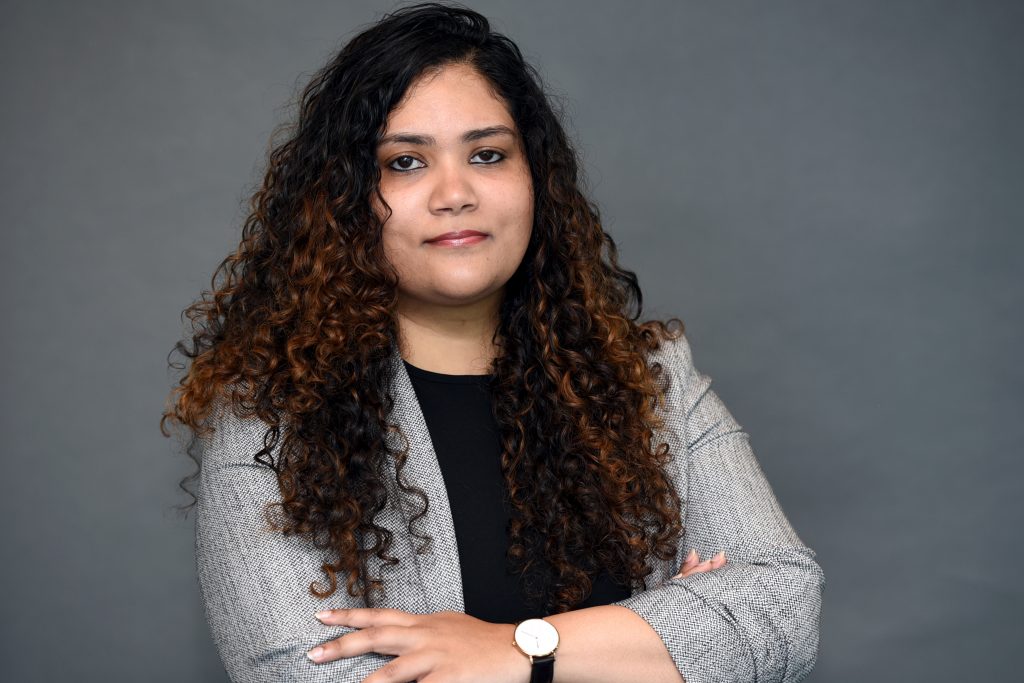
When it comes to data, size doesn’t matter. It’s what you do with it, says Sonia John, Associate Director – Digital Transformation at Hearts & Science MENA.
Beirut has been gaining traction over the years in the realm of innovation and entrepreneurship. Developments such as the Beirut Digital District are indicators of a newly emergent digital hub in the Middle East. As digital marketing continues to proliferate, numerous agencies are looking for fresh talent to meet market demands which makes Lebanon an attractive place for Dubai based companies to relocate their digital teams to Beirut.
While it’s easy to be drawn to Beirut for its affordability and cost efficiency, OMG MENA was also keen to tap into its large talent base. This resulted in its strategic decision to establish its technical and administrative services unit, CORE, in Beirut. According to Elda Choucair, COO at OMG MENA, it was a “conscious decision to capitalize on local talent. We never had the intention to create just a digital hub but a new efficient and agile structure to take us into the future”.
Beirut differentiates itself from the rest of the MENA region with its “ability to aim global due to their anthropological development and the ability to adopt a universal view”, according to Choucrallah Abou Samra, Managing Director of OMG’s CORE. However, he sees Lebanon’s entrepreneurial ecosystem as still young and in need of nurturing through investment, infrastructure, and regulation.
To learn more about how Beirut is growing as an innovative and entrepreneurial hub, check ArabAd’s article.
This article was originally published by Campaign Middle East.
OMD MENA has promoted Wissam Najjar, its regional managing director, to the position of Chief Operating Officer. Until now, he was responsible for the Levant, Egypt and the Gulf. He will now add the North African and UAE offices to his remit.
Najjar has been at OMD for 16 years. In that time, he has proved instrumental in spreading OMD’s culture and difference across all the markets he’s managed. As well as spurring their performance, he’s also spearheaded the expansion of the network to Bahrain, Iraq and Jordan and solidified the relationships with local and regional business partners.
In this new role, Najjar is being tasked with propelling OMD forward and delivering a consistently best in-class product across all its markets, through the optimal combination of talent, technology and resources. While he continues to report to Nadim Samara, CEO of OMD MENA, all local offices and network operations will now report into Najjar.
“Wissam is ideally placed to further capitalize on the power of the network and the strengths of our great local operations to deliver an even stronger client performance and operational efficiency,” stated Nadim Samara. “He will build on our current scale, which we’ve achieved with high-performing and like-minded teams, and leverage all potential synergies.”
“Despite the headwinds, there are still many growth opportunities for marketers across the region. It’s a case of knowing where to look and how to activate them,” commented Wissam Najjar. “Connected and empowered by technology, OMD’s experts define and deploy creative and effective strategies for clients everywhere to unlock these pockets of growth.”
The promotion is effective immediately.
 In a few short years, the cookie transformed from the good guy of the Internet that delivered a more seamless experience into the bad guy that observed and reported our every move online. Thanks to various scandals and breaches, consumers have become very aware of the value of their data and some are fighting back, taking various measures to stop the surveillance. Regulations, like GDPR and many others, are helping them by making some data practices illegal. Fines are being levied, some running in hundred of million euros, and will eventually act as a deterrent.
The privacy debate has reached the stage where many are now calling for the eradication of the cookie. The industry has not wasted time to find a way forward. There now are multiple initiatives to balance privacy protection and web-tracking data that is of value to brands and publishers. There are risks of course, as Google estimates that serving less relevant ads in the absence of cookies reduces publishers’ revenues by 52% on average.
Will the solution be log-in data? Will it be Google’s set of open standards for privacy on the web? Whatever the industry adopts, it will be different from what we have today and there will be winners and losers.
In an op-ed published by Arabian Business, Fadi Maktabi, General Manager of Hearts & Science MENA, explains how the cookie’s extinction ushers in a new era in digital marketing. You can read it here.
Omnicom Media Group’s data, analytics and technology consultancy Annalect has welcomed two new senior executives in the MENA region. Andreas Frangeskides has joined as Director-Marketing Solutions, while Oleksandr Cherviakov is now the consultancy’s Senior Manager-Business Solutions.
 Frangeskides was previously the Data Lead at PHD in the UK. He brings over 10 years of experience in multi-channel planning and buying, data management, analytics and reporting, project management, research and insight development. He has worked with agencies, media and clients, giving him a unique perspective on the advertising industry.
Frangeskides will lead on the client solution portfolio, including Omni, Omnicom’s people-based, precision marketing and insights platform. Both strategic and operational, he will be part of the team working on the business transformation of the group’s clients.
His mission is to ensure Omnicom Media Group’s clients have access to best-in-class marketing products and consultation. These include bespoke analytics, a new multi-touch attribution tool and addressable audience activation.
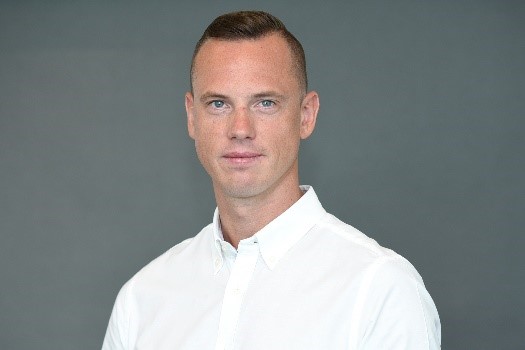 Cherviakov will lead on the transformation of the agencies through automation. These projects will strengthen the group’s current tech stack, with more to follow.
A senior software engineer and a certified ethical hacker, Cherviakov has long focused on making technology work for his clients. In his 15-year career, Cherviakov has worked across varied sectors, including IT, automotive, trade/logistics, oil and gas, and media, in both the public and private sectors.
He delivers IT infrastructures that enable the automation of manual low-value tasks. He also provides tools for comprehensive business decision-making and optimized business processes. His task is to make sure OMG extracts the full value of the data it handles.
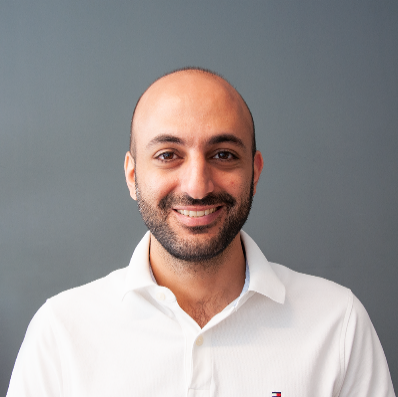 Separately, the holding group has appointed Joubran Abdul Khalek as Head of Performance & Programmatic in its regional hub in Beirut, CORE. He comes from Publicis Media, where he was head of Center of Excellence.
Abdul Khalek has over 11 years of experience in digital marketing, gained across the Middle East and many client sectors. He has a deep understanding of the regional digital landscape and expertise in search, programmatic, tag management, social performance and content. As an ardent tech evangelist, he believes in the power of data.
At OMG MENA’s CORE, he leads more than 30 experts who work on the group’s agencies’ campaigns. His task will be to stimulate his team’s growth and development, as well as their performance, focusing on both talent and product.