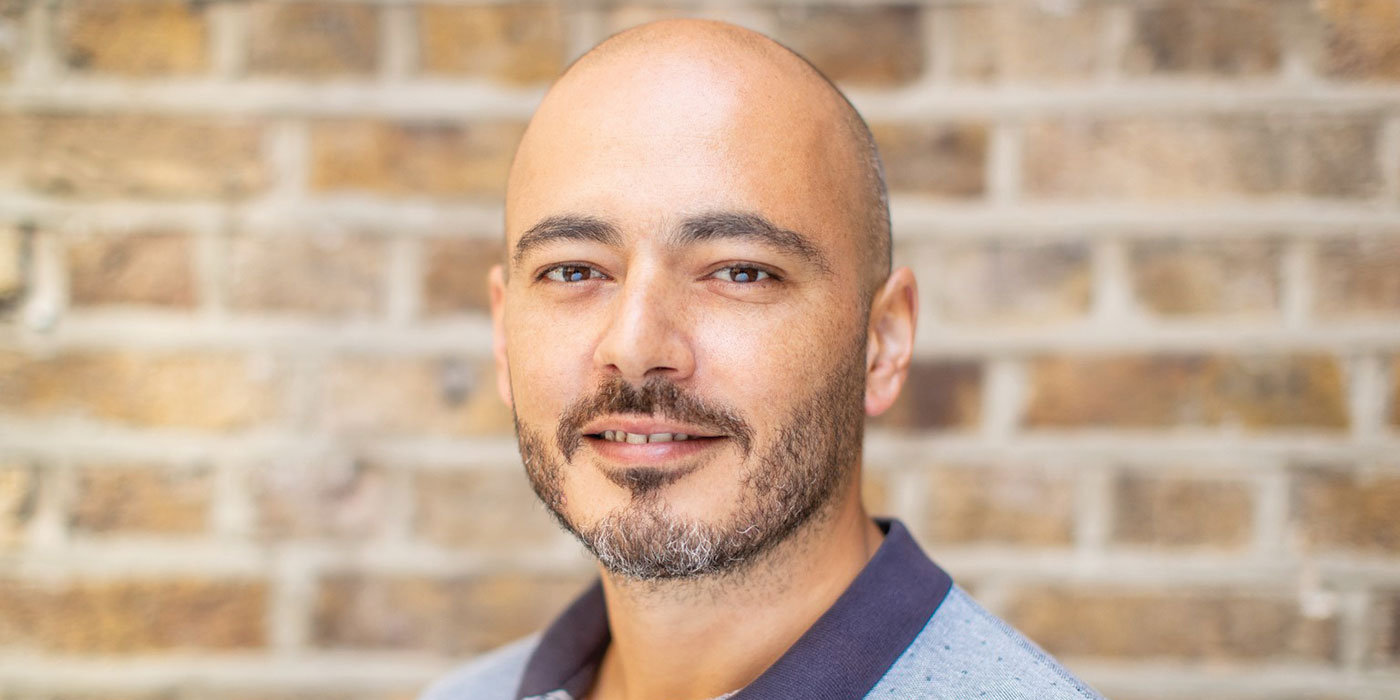
Omnicom Media Group MENA has announced the promotion of Elda Choucair from COO to CEO. Elie Khouri will now concentrate on his role of Chairman and ensure a seamless transition at a time when the holding group has shown substantial growth over the last year.
Elda’s tenure as COO has seen her focus heavily on the group’s response to the impact of the pandemic. She has further demonstrated her leadership talent by successfully addressing both internal and external challenges and played a crucial role in transforming OMG’s regional operations by readying its resources for new and emerging market expectations.
In the last couple of years, the holding’s networks, OMD, PHD and Hearts & Science, have secured impressive account wins and award recognition at the MENA Effie and the Dubai Lynx. They also enhanced their talent pool through skill development and recruitment and deployed several new processes and platforms to respond to challenges with speed, precision and effectiveness.
A 15-year veteran at the group, Choucair held senior account positions at OMD and led PHD for over 10 years. Under her leadership, the regional media planning network grew seven-fold and became a key player in the region. Her success in creating a future-ready positioning for PHD made it a compelling proposition for both staff and clients, recognised by prestigious awards and accolades.
She will continue to report to Elie Khouri, who founded OMG two decades ago and whose career at Omnicom spans over 30 years. In that time, Khouri has stimulated the group’s growth, in scale and service offering. and steered it to a leadership position on a broad range of metrics. The company has long been recognised as one of the best employers in the UAE and a leader in sustainability.
Choucair will now assume the full control of all OMG MENA operations and accelerate their transformation to stay ahead of the curve. She is also an active industry figure, as vice chair of the Advertising Business Group, board member of the IAB GCC, and the IAA UAE Chapter, and a founding board member of the Unstereotype Alliance.
“Elda is a true success story in her own right and has never stopped impressing everyone around her. Her vision, coupled with her pragmatism and attention to detail, means that she knows where we need to go and how to get there,” said Elie Khouri, chairman of OMG MENA. “Her relentless dedication and drive have earned her immense respect. Elda certainly has an impeccable track record of advancing 360° growth, capability expansion and overall excellence at both agency and holding levels.”
“Our regional management’s ability to stimulate growth for our clients, our staff and our agencies in the face of adversity is truly remarkable. Credit goes to Elie who has engineered and nurtured this inspiring culture of course but also to Elda, who’s embraced it fully,” commented Mike Cooper, OMG CEO for EMEA and APAC. “Elda’s contribution to our success in the region to date has proved critical. Her energy, commitment, client skills and professionalism will serve her well in her new role to assure the best outcomes for all our stakeholders and clients. She is the perfect person to take OMG MENA forward.”
“Navigating complexity and ambiguity certainly makes leadership exciting and rewarding in equal measures. Our industry, in the midst of a deep and rapid transformation, provides plenty of both and if we are to make complex simpler and better for our clients, we owe it to them to start with ourselves,” said Elda Choucair, CEO of OMG MENA. “We’ve already had plenty of opportunity to innovate and adapt to new conditions of course so we’re well used to questioning and challenging the status quo. We’re ready for what lies ahead.”
This article was first published in Campaign Middle East
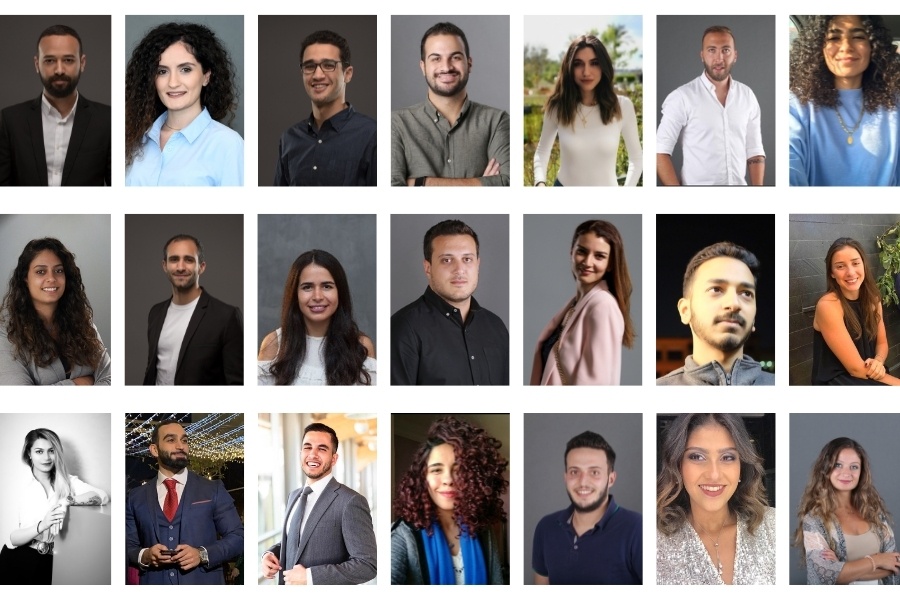
Campaign Middle East has highlighted the rising stars in the media industry with their annual Faces To Watch List. Here are the 21 OMGers across the MENA network who were featured.
OMD
- Abd El-Rahman Bakry, Senior Media Executive – Integrated Planning, OMD Egypt
- Ahmed Hossam El Deen, Senior Integrated Media Executive, OMD Egypt
- Mai Amr Diaa, Senior Integrated Media Planner, OMD Egypt
- Hazem Ragab, Social Media Manager, OMD Egypt
- Hassan Abbas, Manager, OMD UAE
- Danielle Abou Fayad, Media Manager, OMD Iraq
- Clara Kandil, Senior Executive – Performance, OMD UAE
- Eddy Hanna, Manager – Strategic Marketing Investments, OMD UAE
- Isabelle Abou Samra, Senior Social Media Executive, OMD UAE
- Nadine Ezz Eldine, Manager – Planning, OMD UAE
- Nour El Dakdouki, Planning Manager, OMD Dubai
- Tatiana Boustani, Senior Planning Executive, OMD UAE
- Ribal Stephan, Manager, OMD UAE
PHD
- Ihab Halawy, Investments Manager, PHD UAE
- Sara Fares, Planning Manager, PHD UAE
- Nihad Younis, Senior Executive – Social Media, PHD UAE
- Lobna Wagdy, Integrated Manager – Planning, PHD Egypt
- Shahira Ashour, Media Executive, PHD Egypt
Hearts & Science
This article first appeared on PHD Media.
PHD’s Head of Creative Services, Nawal Nasreddine speaks with our Head of Strategy, Daniel Shepherd, about how to remain ahead of trends on social media, how to inject creativity into your communications and how to strategize so brands can position themselves in the entertainment industry, not the persuasion industry.
Together, the two media specialists discuss the rapid growth of time spent on social media; up by 60% since pre-COVID-19 and how this increase in usage has created multiple fast-paced changes in the industry and the way platforms are used by consumers and brands. Mirroring the surge in activity there has been a dramatic increase in user-creativity which has had a knock-on effect in the world of media. It has never been more important for brands to respond creatively and to structure content strategically in order to be top-of-mind of your consumers.

Social media is a core channel to reach your audience in today’s climate and Daniel asks the crucial questions that need answering about how to plan content and reach your consumers effectively. Nawal addresses 3 key areas including the importance of ‘creativity over relevance’, planning content and a brand’s ‘big idea’ and how authenticity is the new perfect when it comes to content creation in a lock-down.
Find out more by listening to the episode here
Also available on Spotify, Anghami, Audioboom, Deezer and Apple Podcasts.
This article first appeared in the May 2020 edition of Images Retail ME.
As non-essential stores close and social distancing measures keep people confined, Stefanie Cunningham, OMG Transact MENA’s General Manager, explains how to quickly move into ecommerce and generate online sales
The lockdowns implemented by Middle Eastern countries are having a significant impact to their economies. But some businesses, especially eCommerce ones, have seen explosive growth: Instashop’s mobile app downloads are up 70%+; Mumzworld is reporting an increase of 800%+ in demand; and Carrefour UAE is exceeding maximum capacity in online grocery deliveries. Essential categories like home cleaning, hygiene and groceries have logically seen a huge spike in demand. But as the world now begins to settle into its ‘new normal’, categories like home fitness and skincare lotions are beginning to scale online, with rises in demand of 307% and 79% respectively. A recent Ipsos study highlighted 48% of Saudi consumers were purchasing products online more frequently than they would usually do offline.
The growth of eCommerce in the Middle East, which was already forecasted to be the fastest globally with a CAGR of +28% to 2022, is set to accelerate further. Companies with existing eCommerce operations in place can redirect their focus to their online channels to weather this storm. But what if your brand currently only operates offline? Here are three ways to pivot to ecommerce quickly:
- Activate online ordering through your existing digital footprint
A quick and simple solution is to let your existing or potential customers know that they can place orders by phone, WhatsApp, social or email. Leveraging your store staff or customer service teams to receive inbound orders and supply local consumers quickly using on-demand couriers services like Quiqup.
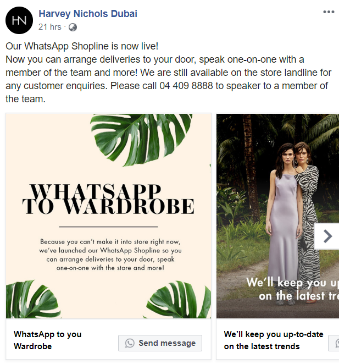 Harvey Nichols in Dubai did just that with its ‘WhatsApp to Wardrobe’ service. Consumers can browse the store’s product range on their website or social, liaise with Customer Service via Messenger, phone or WhatsApp, place an order and enjoy quick delivery, paying on arrival.
- Leverage online marketplaces
Online platforms like Amazon, Noon and Deliveroo allow brands to leverage their existing consumer traffic and established ecommerce solutions to begin selling at speed and scale. Operating as either a vendor or merchant, the activation process is simple and there are plenty of solutions no matter the category.
Emaar’s Dubai Mall recently launched its virtual showroom on Noon, providing online sales opportunities on their leading home-grown marketplace, to support its tenants after the mall was forced to close. .
With the lockdown, restaurants visits have come to a halt, but home deliveries allow outlets to continue to trade. Within just 48 hours, the Dubai based platform Support Local Restaurants launched and onboarded 300 restaurants, providing them with cost-effective marketing, ordering and delivery capabilities. We’ve also have seen grocery retailers tapping into food delivery apps, like Danube with Hungerstation, to scale their online sales. The automotive industry traditionally sees 98% of sales occurring offline. To counter the lack of showroom traffic, Chinese car brand Geely leveraged the Tmall marketplace to continue to market and take deposits for cars online. It also provided test drives via online, augmented reality experiences.
- Launch your own online ecommerce-ready platform:
Activating your own direct-to-consumer ecommerce (DTC) proposition can be achievable in the short-term if you leverage a ‘plug and play’ provider like WooCommerce, Shopify or Squarespace. They provide readymade templated websites and simplified interfaces allowing you to launch your catalogue of products or range of services with relative ease.
Georges Of Dubai, a local gifting and homewares brand in Dubai, leverages Shopify’s quick to launch ecommerce platform to sell to Middle Eastern consumers whilst their offline store is closed. They provide free delivery through Fetchr’s courier services, emphasizing their sanitized, contactless deliveries through their social channels.
Before investing in your own DTC ecommerce venture, you need to review your business model and its suitability for this channel. To ensure a winning DTC proposition, think about whether your brand can sell online as it currently is or whether you need to adapt. Here are some considerations:
- Profitability: Do the price points of your product ranges take into account the production, delivery, payment and marketing investments associated to hosting an online platform? Or should you look to bundle your products or set a minimum shipping fee to increase your basket spend?
- Accessibility: Are your products already in wide distribution with strong online competition? Should you look to add a point of differentiation such as personalization or accelerated delivery options?
- Proposition: Does your offering meet a current consumer need or present a solution to their problems? How can you provide relevance to consumers under this current climate in your marketing, merchandising and communications?
- Business Model: Can you adapt your traditional business model, such as providing webinars, services or subscription models?
Winning in eCommerce, just as in offline retail, requires you to acquire, convert and retain consumers at a cost respectably lower than their average lifetime value. It requires a talented team or partnership to ensure investments into your online channel provide sustainable returns, underpinned by data to thoroughly measure, test and scale your business based on insights, not opinions.
Now, more than ever, is the time to ensure you have a balanced channel strategy in place by embarking into setting up your online channel in MENA. This will require time and investment, but this is an essential step towards future-proofing your business with the agility to adapt.
The age of digital disruption has and will impact all verticals and channels. It is therefore essential to ensure consumers can transact with your company seamlessly across their end-to-end journey whether this is online or offline.
Stefanie Cunningham is the General Manager of OMG Transact MENA, Omnicom Media Group’s strategic eCommerce consultancy.
This article first appeared on PHD Media.
Data and strategy experts discuss how to manage data overload and bias in today’s challenging climate. They also explore how people, marketers and business leaders can communicate and make better, safer and more effective choices.
The second episode of PHD MENA’s podcast series addresses the essential questions marketers and business leaders need answered as they navigate through this challenging period. ‘The New Abnormal’, released this week, features Data Dave, aka David Barnes, PHD’s Director of Data and Measurement, and Daniel Shepherd, PHD’s Head of Strategy.
Amid the global Covid-19 crisis, anxiety has never been higher and yet neither has access to and the prevalence of data. Every day, we are bombarded by charts and graphs in the news and across social media. Whilst designed to inform, they can create greater levels of concern at best and spread potentially dangerous disinformation at worst. The BBC reports that 46% of UK adults have been exposed to false or misleading information about the Coronavirus. In this second episode, David and Daniel bang heads on how to manage data overload and bias through data visualization. They discuss what data signals to listen to, how to read them objectively and how to apply the insights they reveal to help us bring clarity into uncertainty.
Another topic is how brands can use data to understand how to best operate and communicate during a challenging period. They dissect a range of business cases dating back to the last financial crisis and their outcomes. Daniel states there has never been a better time to ‘clean out your cupboards’ be it at home or in the office, organizing your data infrastructure, fine-tuning your eCommerce strategy or really solidifying your brand purpose with consumer sentiment at the center.
Find out more by listening to the episode here
The second episode of PHD MENA’s podcast is also available on Spotify, Anghami, Audioboom, Deezer and Apple Podcasts.
This article was originally published by Campaign Middle East.
Over the past few years, I have engaged in the perilous game of making predictions for the MENA marketing and communications industry. Perilous because, more than ever, the whole ecosystem is tied to brands’ market performance, which in turn is linked to the region’s geo-political and economic developments. And therein lies the problem with forecasting in our region, where tensions flare up at the flick of a tweet and confidence plummets as rockets fall on oil facilities. The only thing we can safely predict is unpredictability.
There are deep-seated trends under this volatility. One of them is that marketing is changing, as are CMOs’ priorities. More and more resources are going into marketing infrastructure, technology, data, insights and analytics. Digital marketing and the transformation of business models remain on top of their agenda. All of this will keep affecting the scale and allocation of marketing budgets.
During the last five years, the Middle East has experienced an unprecedented 40 per cent reduction in advertising investments. This year, we won’t see the bottoming out we expected, let alone a rebound. Marketers have found more reasons to make budget cuts as their sectors softened further.
The real purpose of making predictions is not the satisfaction of being vindicated but to observe, investigate and eventually learn and share. So, what do we make of 2019 and what can we expect from 2020?
The Levant dropped further in 2019, with problems in Syria and recessions in both Lebanon and Jordan, and should end the year at -10 per cent. The uprising in Algeria brought some uncertainty to an otherwise stable Maghreb, resulting in a 5 per cent drop. Egypt has gone from strength to strength and looks like it’ll close the year with a healthy 15 per cent increase in marketing investments. In the GCC, the UAE suffered from a noticeable reduction in public investments, while Saudi Arabia will show a 10 per cent increase on 2018, thanks to a massive push by the public sector and modest improvements in the economy. So, despite the gloom and doom, MENA will end 2019 down 5 to 7 per cent on the previous year. While this number will look conservative to many media owners in the traditional space of TV, old-school digital publishing, print and outdoor, the global digital players (Facebook, Google, Snap and Twitter) will register a high double-digit growth. Programmatic trading will rise by 50 per cent, and investments in influencer marketing are set to grow massively on 2018.
If advertising investments were to correlate with GDP growth, then 2020 should be a decent enough year. Most analysts expect the regional economy to rise by 3 to 4 per cent next year. In advertising terms, the stars should be Egypt, thanks to economic improvements, and Saudi Arabia, if public investments continue to strengthen. The UAE will soften further despite Expo 2020. Next year, growth in the region will most likely be flat compared with 2019, but could see a small single-digit increase if Saudi Arabia over-performs.
1. The localisation of the workforce will be a double-edged sword
GCC nationals are much less present in the private sector than in the public sector. Between 40 per cent and 60 per cent of public budgets go to wages and compensation. With state finances under pressure, governments are pushing their nationals into the private sector. Any form of coercion to absorb additional workforce will simply move the burden to private companies that can ill afford it. Reserving certain positions for locals, limiting expat visas and other forms of restrictions on recruitment will be a short-term fix to a long-term problem. Employment based on nationality, rather than merit, is unlikely to achieve the highest corporate and economic goals. This approach will discourage foreign direct investment and runs counter to the notions of openness and fairness, which are essential to the proper functioning of economies. A better solution would be to stimulate entrepreneurship and self-employment, with training, support and funding.
2. The public sector will have to choose between cooperation and competition
GCC governments have long strived to diversify their economies and actively invested in state-owned enterprises (SOEs). While they implement business-friendly policies, they unfortunately also often compete with private businesses, introducing new regulations that bend rules in favour of SOEs. As this offsets the good work to attract foreign direct investments and stimulate entrepreneurship, governments will need to decide what is more important to them: cooperation or competition. A way forward would be more public-private partnerships.
3 Riyadh will challenge Dubai’s position as the regional hub
The transformation of Saudi Arabia has only just begun, and yet talk of company and job relocations to the Kingdom’s capital is growing. While the modernisation and liberalisation of its lifestyle is high on the agenda, there is still some way to go before Dubai’s status comes under real threat. The Saudisation of the workforce will certainly not help to attract foreign companies and talent but Dubai shouldn’t become complacent. The city-state will need to strengthen its relationship with companies, provide added incentives for the corporate workforce and consider its value proposition in the context of Saudi Arabia’s scale to remain attractive in the long term.
4. Saudi Arabia will win the Arabic content game
Saudi Arabia is making a play for the Arabic content crown and has the resources for it. There’s the $300m+ investment in Shahid (regional broadcaster MBC’s video-on-demand platform) over the next three years and several films and TV series in production. There’s also Jeddah’s new Red Sea International Film Festival starting next year, on top of hundreds of new cinema screens. The country made a big impression at last year’s Cannes Film Festival, where it announced its plans to build a film industry. Now that Netflix appears to have lost interest in Arabic content to focus on bigger markets and kids’ programming to fend off Disney, MBC, the country’s champion, will increase its domination with its expanding content empire.
5. Myopia will prevail as brands continue to focus on the short term
Like their consumers, brands are increasingly living in the moment. A survey by Gartner found that a growing proportion of US CMOs are moving towards a more agile, project-based approach to budget setting. Goals and activities are more and more short-term, as the pressure to deliver results, especially sales, intensifies. Speed now prevails, and clients demand agility and responsiveness from their agency partners. As long-term brand building is being pushed down the list of marketing priorities, agencies will need to reorganise and restructure their teams and processes to reflect this new reality. That’s not the only path. According to an Institute of Practitioners in Advertising (IPA) survey, the decade-long focus on short-term activations is damaging brands and reducing effectiveness. Marketers could choose to build future demand and loyalty further. This would mean investing in campaigns that change behaviours over time and rebalancing budgets towards brand building.
6. The communication industry will court SMEs more than ever before
With an estimated value of $1 trillion, SMEs have become a force to be reckoned with in MENA. They represent 96 per cent of registered companies in the region and claim a share of GDP as high as 80 per cent in Egypt and 60 per cent in the UAE. SMEs promote competitiveness, increase productivity and could well be the solution to the unemployment situation in the Middle East. However, they need the full support of an ecosystem currently locked on large businesses. The advertising industry has been built on successful, ambitious and prestigious brands. With large budgets melting, agencies will now explore previously untapped growth opportunities and adapt their service offering to SMEs.
7. The failure of TV measurement will keep putting pressure on the medium
TV measurement in Saudi Arabia is in a shameful state of limbo. This failure to launch a meaningful system gives marketers more reasons to limit their investments. In other words, the industry is shooting itself in the foot. With constant leadership changes in the regulating bodies and major concerns with financing and corporate governance, TV measurement is unlikely ever to see the light of day in Saudi Arabia. Moreover, TV ratings measured in living rooms are increasingly irrelevant in the context of digital media consumption. Now is the perfect time to pivot away from legacy technologies and work on a holistic system that reflects today’s reality and meets the needs of advertisers. Otherwise, TV will pay the price of this failure and this effective medium will unfairly be committed to history.
8. Broadcasters will lessen their dependence on advertising
With brands’ TV budgets falling, broadcasters’ dependence on advertising revenue is becoming toxic. Few of them have gone digital with streaming platforms and VOD services, so subscription revenue is still very low. Currently estimated at $250m, analysts expect this income to grow to $1.2b by 2024. This is not impossible, as Shahid Plus reported a 62 per cent increase in paid subscribers last Ramadan alone. While the competition with international giants, including Amazon Prime, Disney + and Apple TV, will intensify, local heavyweights like Shahid and StarzPlay will continue to scale up and increase SVOD (subscription-based video on demand) revenues. Traditional broadcasters will need to diversify quickly and offer product placement/brand partnerships, sell owned content to other digital platforms and leverage the power of their stars in brands’ influencer marketing activities.
9. Influencer marketing will see high double-digit growth
Demand for influencer marketing is rising fast. It is now a $15bn industry globally, with some multinationals allocating up to 75 per cent of their marketing budget to digital marketing, particularly on social media influencers. From $160m this year in MENA, the sector will grow by 50 per cent in 2020 and exceed $400m in 2022. This will be on the back of greater accuracy in performance measurement and a foray into s-commerce (social commerce). The long-term viability of the medium and success of influencers will require nothing less. Instagram’s decision earlier this year to test hiding vanity metrics will eventually push influencers and brands to embrace more significant KPIs and performance-driven remuneration models. Likes and follower counts were never water-tight measures anyway.
10. Amazon will challenge Snap for third place in the region
Amazon is now the third largest digital advertising platform globally and is growing faster than Google. Now that Amazon Advertising is available in the region, with its large, in-market audience that can be targeted based on real shopping and buying insights, the scales will tip even further towards digital. While the dominance of the Duopoly will continue unabated, as will Snapchat’s ascent, Amazon’s impact will be felt much more strongly further down the chain. Local publishers will find it even harder to compete in terms of audience, data, technology, content and services. The best options for them will be to transform their business model, create new sources of revenue beyond advertising and collaborate on data and programmatic trading solutions. If they don’t, they will fail.
11. Agencies will rely less on awards to promote their value to clients
Who doesn’t like an award and a moment on stage? From the Oscars to the Effies, there is no shortage of ceremonies to celebrate winners in every imaginable discipline. This doesn’t make them the best yardstick though. A study by the IPA has shown that over the past 24 years, the effectiveness of creatively awarded campaigns has constantly declined since 2008, largely because trophies have gone to under-performing, low-budget, digitally-focused campaigns. While awards come with some benefits, including boosting pride, morale and perception, their actual impact is hard to quantify. What is perfectly measurable, however, is the cost attached to participating in them. From entry fees and supporting material to gala dinner tickets, many agencies are questioning their return on investment and will look for alternative ways to objectively validate their quality and performance.
12. Climate activism will be expressed in the aisles rather than the streets
Concern about climate change is rising among Middle East citizens. Several studies show that more than 60 per cent of residents are worried. If the younger generations appear more concerned, the poorer segments are less so. While this anxiety can’t easily be expressed in the streets, more and more people here accept they have a responsibility and role to play. Some, like the Arab Youth Climate Movement, hope to change minds and policies by lobbying governments. Many more modify their purchase decisions to align them with their values. Manufacturers will need to ensure their products and packaging are environmentally friendly to counter the rising competition of entrepreneur and activist brands.
13. Having a purpose will be as important as
having a brand
Earlier this year, the industry body for leading US CEOs changed the definition of the purpose of a corporation it had held for more than 20 years. Instead of stating that its duty was to its stockholders, the organisation now believes that a business has a broader responsibility to society. The age of purpose and activism is upon us. It’s not about cloaking a brand in goodwill and doing good occasionally. It’s about standing for something meaningful, proving it and making a tangible difference. Why? Because it’s a rallying cry, a differentiator and a magnet for people who share the same beliefs. We will see more and more organisations going through introspection to determine what their purpose is and working, authentically, towards a stated and achievable societal goal.
When times are tough, the focus shifts to more immediate and primal considerations. The issue is that we then tend to lose perspective and context. There are tectonic shifts happening and some trends are more perceptible than others. The dichotomy between marketing and sales appears
to be fading, and execution seems to become more important than strategy, for example. These changes require us to consider the big picture and remain agile to stay relevant in the years to come.
We’re certainly faced with several challenges. Digitisation, automation, offshoring and localisation of the workforce, on top of geo-political tensions and the paradigm shift that comes from the emergence of Saudi Arabia, are reasons enough to pause and reflect. Our response to them needs to consider both the short and long term. Industries that haven’t upended their business model are shedding jobs and this goes for our sector too.
Behind any challenge there is an opportunity. There is still growth and optimism if you look closely enough. Our industry has a unique talent in finding a positive in any product or service. This is how we build brands. Let’s turn the tables and apply this positivity and enthusiasm to ourselves. Time to lose the doom and gloom, unleash our ambition, roll up our sleeves and look forward to better times ahead.
This article was originally published by Campaign Middle East.
OMG MENA has announced the opening of the regional operation of its dynamic creative specialist agency Adylic. It specializes in data-driven, personalized creative advertising and dynamic creative optimization (DCO) solutions. The Dubai operation, its seventh in the world, will serve the whole of the Middle East and North Africa region (MENA).
Founded in 2011 and acquired by Omnicom Media Group in 2014, Adylic has been a pioneer in HTML5 development. Dynamic creative is the automated conception, in real time, of personalized advertisements based on data insights. The ads are also adapted to various channels, formats and screens.
Adylic uses data science to extract differentiated creative insights from performance data to optimize campaigns on the fly. Generating a vast number of ad variations to better suit each online user and screen, it delivers higher levels of efficiency, precision and relevance, better business outcomes and a stronger return on advertising investments.
Raouf Ketani, who has led Omnicom Media Group’s data, analytics and technology consultancy Annalect in the region since 2016, will now head Adylic in MENA. Ketani has 20 years of experience in digital advertising, data and technology, at media companies before moving to the agency side.
“Personalized advertising at scale is marketing without compromise. This is an extremely powerful proposition for advertisers everywhere and we’re already seeing excellent levels of interest and demand for Adylic’s unique DCO solutions in the region. We’re already working with several clients across different sectors,” said Adylic MENA’s Raouf Ketani.
“Just like we adapt the creative messaging to its audiences, we tailor our service to our clients and their agencies. Depending on their preference or requirements, we provide managed services, which involves our creative strategists, designers, developers, data analysts and dynamic feed specialists, or the direct access to our platform,” explained Alex Newman, the London-based President of Adylic. “This is a compelling proposition that we’re very excited to bring to the Middle East and we’re thrilled to have Raouf take us forward in our newest market.”
“Audience targeting, on its own, is not enough to personalize the online experience. Marketers must also adapt their advertising creative to multiple target audiences to make it relevant and engaging,” said Omnicom Media Group MENA’s chief operating officer Elda Choucair. “Personalized ads improve the online customer experience and, with Adylic, marketers can deploy DCO to achieve large-scale creative personalization efficiently.”
OMG EMEA has announced three promotions at the top of its Middle East/North Africa (MENA) operations. The regional CEO, Elie Khouri, has been elevated to chairman, while OMD MENA’s CEO, Nadim Samara, takes the same position at the regional holding and PHD’s CEO Elda Choucair moves to the newly created role of COO.
At Omnicom Group for over 30 years, Elie Khouri has been leading its media division in the Middle East since 2001, when he left BBDO to become a founder of OMD in MENA. In 2006, he assumed the leadership of the newly formed OMG in MENA, following the opening of PHD in Dubai. Over the years, Khouri has stimulated the group’s growth and steered it to a leadership position on a broad range of metrics. In his new role as chairman, he will continue to lead the group’s strategic offering to clients and other stakeholders by fostering closer collaboration with other Omnicom entities. He will also ensure the smooth transition of the executive role to the new management team. Khouri will report to Mike Cooper, OMG CEO for EMEA and APAC.
Nadim Samara, currently OMD MENA’s CEO, will now lead OMG MENA as CEO. At OMD since 2002, Samara has rapidly progressed through the ranks, from planning to analytics and agency management, and across functions and geographies within the global network. He has led OMD’s regional transformation to a data and business performance-focused operation. Samara has also been the architect of its success in new business, innovation and recognition, with OMD being named Media Agency/Network of the Year at multiple award festivals in MENA. He will continue to report to Elie Khouri.
Leading PHD in MENA since 2008 and as its CEO for the last three years, Elda Choucair is one of the top executives in the GCC’s media industry. Under her leadership, the company has grown seven-fold and become a key player in the region. Choucair’s success in creating a future-ready positioning has made PHD a compelling proposition for both staff and clients, recognized by prestigious awards and accolades. She will expand her remit across the group as COO for the holding.
“Our operations in the Middle East are a great source of pride as we lead there on many fronts across our networks and units. In these transformative times, speed, agility and innovation are huge assets and our leadership in this region has amply demonstrated the results of this approach,” said Mike Cooper, OMG CEO for EMEA and APAC. “With this new management structure, we will combine and capitalize on all this energy in order to grow further. We are uniquely placed to realize new opportunities to enhance operational efficiencies and service quality for the benefit of our clients.”
“What makes working in the Middle East so exciting is that there is still plenty to achieve. And with Omnicom’s vision for talent, the growth prospects are endless. I am delighted to be given the opportunity to keep adding value and contribute to further progress in our group and our industry,” Khouri commented. “Together with Nadim and Elda, I look forward to widening our group’s offering, strengthening our values and principles, and shaping our collective future.”
The promotions are effective immediately.
This article was originally published by Campaign Middle East.
AFAF ZAHER, 29, SENIOR EXECUTIVE, OMD UAE
 Nominated by Terry Mo, director of performance, OMD
“Over her past few years with Omnicom, Afaf has become one of our key e-commerce specialists. She managed
some of the first advertisers in the region to use Google Shopping and keyword-level data-driven attribution, both initiatives that generated clear incremental revenue for her clients. Afaf’s audience- and data-driven approach to performance, married to her passion for luxury retail, has generated around 40 per cent to 60 per cent growth in performance billings for her key clients. In 2018 she was awarded OMD’s Extra Mile award for her outstanding and tireless contributions to her team and client. She is definitely one to watch.”
Career path
“I started my career in the performance team in July 2015, working on FMCG, automotive and finance. Based on my performance, I was assigned to LVMH to assist with e-commerce launches. I have continued to learn and challenge existing paradigms, driving early adoption of betas and tests that help maximise revenue across channels. I was promoted to senior executive in December 2017 and am now mentoring fresh recruits, among other responsibilities. In 2017, I was awarded OMD’s quarterly employee achievement award twice, and in 2018 I was awarded the annual Extra Mile award for my contributions.”
Guiding principles
I believe that making mistakes is the best way to learn. So one thing that I would pass on to someone
new to the industry is the importance of having a good mentor who lets you make these mistakes and
learn from them. Another thing that has helped me is prioritisation of work-flow and learning to focus
efforts on what’s truly important. It’s essential to look at the larger picture while working on the
granular detail of performance accounts, in order to not lose sight of the overall vision for the client.
NOUR MONTASSER, 24, BIDDABLE MEDIA EXECUTIVE, HEARTS & SCIENCE
 Nominated by Stacy Fisher, head of digital transformation, Hearts & Science
“Nour has transformed in her year here at Hearts & Science by consistently demonstrating her knowledge internally in meetings with the client teams and externally both with our clients and in media partner sessions. I am very impressed with her even-keeled approach and her positive attitude towards ensuring we reach our client goals.”
Career path
Upon completing her undergraduate studies in Toronto, Nour launched her career in biddable media in Dubai with Wavemaker. Her first client was a global FMCG, which exposed her to the full scope of the social media advertising realm. She is currently a part of the biddable media team at Hearts & Science, focused on delivering data-driven campaigns across social media, display and video platforms.
Guiding principles
At the end of the day, if I walk away confidently knowing I did my absolute best, then my job is done. This is the fire that fuels my work.
SONIA JOHN, 29, ASSOCIATE DIRECTOR, DIGITAL, HEARTS & SCIENCE
 Nominated by Nadim Karam, senior director, Hearts & Science
“Very few people in this industry are as pleasant to work with as Sonia. She’s a great asset to any team, as she will always elevate the conversation and get great work done.”
Career path
Sonia started her career at PHD India on the Unilever account as a digital planner. She then moved to Dubai and joined a boutique agency as a digital specialist, where she led on planning and operations, learning the tricks of the trade. She then moved to Hearts & Science where she works on KFC, keeping data at the core of the operation. This year she was nominated by management and won a global Hearts award for her work in facilitating the digital transformation of KFC.
Guiding principles
“Rest in reason, move in passion” is a quote by Khalil Gibran that I have followed all through my career and I would pass on to someone joining this industry. It is extremely important to be passionate about your work, but reasoning will always keep you grounded. In the ever-changing and growing field of digital transformation, everything that you mastered a week ago no more holds true. So always keep yourself up to date.
ACHRAFE MAMI, 30, MANAGER, BIDDABLE MEDIA, HEARTS & SCIENCE
 Nominated by Fadi Maktabi, general manager, Hearts & Science
“Achrafe has done an excellent job the past year, since moving to the region, at leading programmatic planning within our agency. She is always ready to push boundaries to get things done better, and to top it off she always has an infectious positive outlook on everything.”
Career path
Achrafe started her digital journey at PHD Canada as an analyst, where she quickly rose through the ranks, making manager in less than a year due to her firm handle of programmatic. Over the course of her career, Achrafe has worked across automotive, finance, travel, telecommunications and F&B clients. She moved to Dubai in 2018, to Hearts & Science to lead the biddable media team, covering programmatic and paid social for all the agency’s accounts. This year she was awarded by management for embracing and championing data-driven marketing across all of Hearts & Science’s clients.
Guiding principles
If it scares you, go for it. This is the rule that allows me to grow and learn every day. If it gets too comfortable then it’s time to move to a new challenge. Take ownership. This is something that my first media manager taught me. I would complain about a difficult client or a challenging campaign, and her answer would be that I have to take ownership of this issue and work on fixing it. Anything can be improved if we make the effort to look at things with different perspectives and an open mind.
RANA SAWMA, 30, SENIOR DATA ANALYST, ANNALECT
 Nominated by Raouf Ketani, head of Annalect
“Rana has exceptional data science skills in finding solutions to our clients’ marketing challenges through the use of data and analytics. Within her first two years at Annalect alone, Rana has successfully developed and deployed everything from multi-touch attribution models to highly accurate predictive customer lifetime value models and countless insightful data explorations of MENA consumer habits. A problem-solver and always ready for a challenge, Rana has also mentored young data scientists within the group, helpingthem better understand the work we do.”
Career path
Rana started her career as a web developer in media company Zawya in Lebanon, before moving to the healthcare industry as an analyst. This experience piqued her interest in big data and analytics, leading her to get a Master’s in business analytics and big data. In 2017, she joined Annalect, the data and analytics arm of Omnicom Media Group in Dubai. She is currently on a committee to judge an inter-university data competition that has been organised by Omnicom Media Group MENA.
Guiding principles
I live by three main rules:
1. Treat people the way you want to be treated.
2. Share your knowledge. It’s the best way to grow.
3. Try to learn something new every day.
This article was originally published by Gulf News.
Dubai: More than $1 billion a year spent on advertising in the Middle East and North Africa is ending up in Silicon Valley. And those outflows are only going to get higher and continue to cause serious damage to the region’s advertising and media sector.
“Last year, the MENA region has seen a combined ad spend of $3.4 billion – and digital ads made up about 40 per cent of that,” said Elie Khouri, CEO of Omnicom Media Group MENA. “Now, out of that digital ad spend, over $1 billion has gone to Google, Facebook/Instagram, Twitter, SnapChat and, increasingly, Amazon. That’s money going outside of this region.
“It’s also money not going to publishers, TV stations, content producers, advertising and PR firms in the Middle East. Those dollars are finding their way into (the balance-sheets) of the digital businesses in Silicon Valley or San Francisco rather than into our regional economy.
“That’s why the advertising sector has struggled with job creation, dealing instead with lay-offs, company closures, etc. We can’t ignore the effectiveness of these platforms but as an industry we also need to mitigate the long-term implications of our media allocations on our regional eco-system.”
The Google-Facebook onslaught has already decimated much of the region’s publishing industry, and, in the last four years, even regional satellite TV broadcasters. Ad spend on TV is down to 25 per cent from the 50 per cent share it used to have in the “good old days”, according to Khouri, who believes that TV could yet make a comeback of sorts.
But digital will still reign supreme – from 42 per cent of all advertising spend this year, it will reach 50 per cent in the next couple of years. “Then it should stabilise at that level for some time, because there is still a need for traditional media platforms,” Khouri said.
It’s ironic that when traditional clients are thinking about taking advertising decisions in-house, you have the tech giants — Facebook, Google, and, of course, Apple — doing more with old media.
– Elie Khouri, CEO of Omnicom Media Group
“It’s ironic that when traditional clients are digitizing, sometimes in-housing, their advertising, you have the tech giants – Facebook, Google, and, of course, Apple – doing more with traditional media such as TV, outdoor and, in cases, even print. These tech giants are working with Madison Avenue as part of their brand building. Clearly, it’s working for them.
“It’s time for traditional clients to start reconsidering their marketing priorities. I’m positive that clients taking their advertising in-house is a fad. Over time, it will not be a threat to the advertising industry.”
Khouri, however, will not be drawn into making any firm predictions on what’s in store for the Middle East ad sector this year. And he’s very clear on why he won’t.
“In the last two years, I tried to predict where the industry was going. and it’s tricky to quantify this with the volatile geopolitical and economic landscape,” the CEO said. “I am not going to do that this year. What I can say is that clients do realise we are nearing the bottom and it’s more than likely that they will ramp up investments from this year.” (But what’s unlikely to happen is the regional ad spend getting anywhere near the all-time high of $5.5 billion set in 2014.) Of the $3.4 billion invested last year across the region, the Gulf markets accounted for about 60 per cent. Their share used to be around 70 per cent, but events in Saudi Arabia led to a tailing off in spend during 2018. Saudi Arabia is the largest advertising market in the region, followed by the UAE.
Is it still the case that the ad industry needs to constantly fear the Google-Facebook duopoly? “Look, it’s no longer a duopoly. there’s Twitter and SnapChat and Amazon is going to start featuring prominently. And they won’t be the only ones either. There will be more digital platforms that will become significant.
“Three years ago, the ad industry believed Facebook and Google were threats. Time has revealed it’s best we work with them for the benefit of clients. Agencies have to partner with them.
“I don’t see Google and Facebook muscling into what agencies do – they realise they need us much more than ever. We complement what they do and we definitely are not a threat to them.
“It is us who advise clients on how to leverage these platforms and what the right spending mix between them should be.”
Khouri dismisses suggestions that more digital spending also means less margins for media agencies compared to what they used to get with traditional media.
“Our remuneration model is now based on fees rather than the commissions of the past. Any margin is disclosed and shared with clients based on contractual terms. This not only guarantees our media-neutrality, it also aligns us with our clients’ goals as these fees are linked to previously determined KPIs (key performance indicators) against which we are constantly evaluated.
“Advertisers come to us for effective, objective and impartial advice. There has never been a better time to be working in our industry as harnessing data is making our work more accountable, measurable and valuable.”