
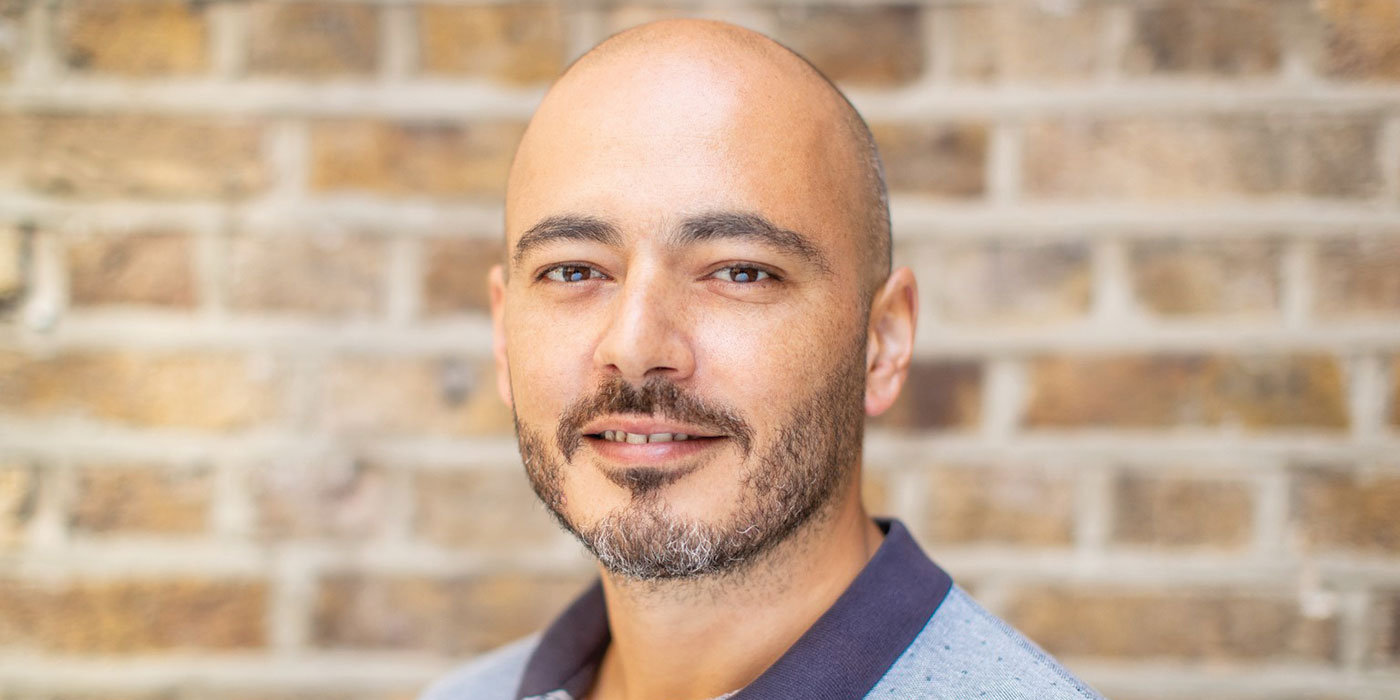
This article was originally published by Communicate Middle East.
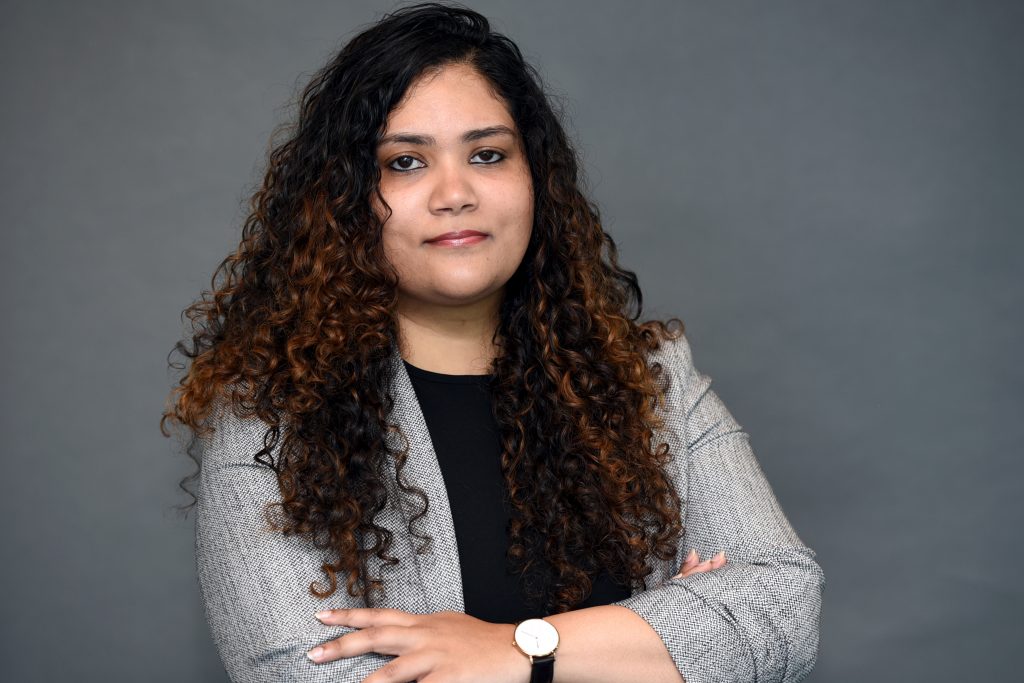
When it comes to data, size doesn’t matter. It’s what you do with it, says Sonia John, Associate Director – Digital Transformation at Hearts & Science MENA.
Beirut has been gaining traction over the years in the realm of innovation and entrepreneurship. Developments such as the Beirut Digital District are indicators of a newly emergent digital hub in the Middle East. As digital marketing continues to proliferate, numerous agencies are looking for fresh talent to meet market demands which makes Lebanon an attractive place for Dubai based companies to relocate their digital teams to Beirut.
While it’s easy to be drawn to Beirut for its affordability and cost efficiency, OMG MENA was also keen to tap into its large talent base. This resulted in its strategic decision to establish its technical and administrative services unit, CORE, in Beirut. According to Elda Choucair, COO at OMG MENA, it was a “conscious decision to capitalize on local talent. We never had the intention to create just a digital hub but a new efficient and agile structure to take us into the future”.
Beirut differentiates itself from the rest of the MENA region with its “ability to aim global due to their anthropological development and the ability to adopt a universal view”, according to Choucrallah Abou Samra, Managing Director of OMG’s CORE. However, he sees Lebanon’s entrepreneurial ecosystem as still young and in need of nurturing through investment, infrastructure, and regulation.
To learn more about how Beirut is growing as an innovative and entrepreneurial hub, check ArabAd’s article.
This article was originally published by Campaign Middle East.
OMD MENA has promoted Wissam Najjar, its regional managing director, to the position of Chief Operating Officer. Until now, he was responsible for the Levant, Egypt and the Gulf. He will now add the North African and UAE offices to his remit.
Najjar has been at OMD for 16 years. In that time, he has proved instrumental in spreading OMD’s culture and difference across all the markets he’s managed. As well as spurring their performance, he’s also spearheaded the expansion of the network to Bahrain, Iraq and Jordan and solidified the relationships with local and regional business partners.
In this new role, Najjar is being tasked with propelling OMD forward and delivering a consistently best in-class product across all its markets, through the optimal combination of talent, technology and resources. While he continues to report to Nadim Samara, CEO of OMD MENA, all local offices and network operations will now report into Najjar.
“Wissam is ideally placed to further capitalize on the power of the network and the strengths of our great local operations to deliver an even stronger client performance and operational efficiency,” stated Nadim Samara. “He will build on our current scale, which we’ve achieved with high-performing and like-minded teams, and leverage all potential synergies.”
“Despite the headwinds, there are still many growth opportunities for marketers across the region. It’s a case of knowing where to look and how to activate them,” commented Wissam Najjar. “Connected and empowered by technology, OMD’s experts define and deploy creative and effective strategies for clients everywhere to unlock these pockets of growth.”
The promotion is effective immediately.
This article was originally published by Campaign Middle East.
Over the past few years, I have engaged in the perilous game of making predictions for the MENA marketing and communications industry. Perilous because, more than ever, the whole ecosystem is tied to brands’ market performance, which in turn is linked to the region’s geo-political and economic developments. And therein lies the problem with forecasting in our region, where tensions flare up at the flick of a tweet and confidence plummets as rockets fall on oil facilities. The only thing we can safely predict is unpredictability.
There are deep-seated trends under this volatility. One of them is that marketing is changing, as are CMOs’ priorities. More and more resources are going into marketing infrastructure, technology, data, insights and analytics. Digital marketing and the transformation of business models remain on top of their agenda. All of this will keep affecting the scale and allocation of marketing budgets.
During the last five years, the Middle East has experienced an unprecedented 40 per cent reduction in advertising investments. This year, we won’t see the bottoming out we expected, let alone a rebound. Marketers have found more reasons to make budget cuts as their sectors softened further.
The real purpose of making predictions is not the satisfaction of being vindicated but to observe, investigate and eventually learn and share. So, what do we make of 2019 and what can we expect from 2020?
The Levant dropped further in 2019, with problems in Syria and recessions in both Lebanon and Jordan, and should end the year at -10 per cent. The uprising in Algeria brought some uncertainty to an otherwise stable Maghreb, resulting in a 5 per cent drop. Egypt has gone from strength to strength and looks like it’ll close the year with a healthy 15 per cent increase in marketing investments. In the GCC, the UAE suffered from a noticeable reduction in public investments, while Saudi Arabia will show a 10 per cent increase on 2018, thanks to a massive push by the public sector and modest improvements in the economy. So, despite the gloom and doom, MENA will end 2019 down 5 to 7 per cent on the previous year. While this number will look conservative to many media owners in the traditional space of TV, old-school digital publishing, print and outdoor, the global digital players (Facebook, Google, Snap and Twitter) will register a high double-digit growth. Programmatic trading will rise by 50 per cent, and investments in influencer marketing are set to grow massively on 2018.
If advertising investments were to correlate with GDP growth, then 2020 should be a decent enough year. Most analysts expect the regional economy to rise by 3 to 4 per cent next year. In advertising terms, the stars should be Egypt, thanks to economic improvements, and Saudi Arabia, if public investments continue to strengthen. The UAE will soften further despite Expo 2020. Next year, growth in the region will most likely be flat compared with 2019, but could see a small single-digit increase if Saudi Arabia over-performs.
1. The localisation of the workforce will be a double-edged sword
GCC nationals are much less present in the private sector than in the public sector. Between 40 per cent and 60 per cent of public budgets go to wages and compensation. With state finances under pressure, governments are pushing their nationals into the private sector. Any form of coercion to absorb additional workforce will simply move the burden to private companies that can ill afford it. Reserving certain positions for locals, limiting expat visas and other forms of restrictions on recruitment will be a short-term fix to a long-term problem. Employment based on nationality, rather than merit, is unlikely to achieve the highest corporate and economic goals. This approach will discourage foreign direct investment and runs counter to the notions of openness and fairness, which are essential to the proper functioning of economies. A better solution would be to stimulate entrepreneurship and self-employment, with training, support and funding.
2. The public sector will have to choose between cooperation and competition
GCC governments have long strived to diversify their economies and actively invested in state-owned enterprises (SOEs). While they implement business-friendly policies, they unfortunately also often compete with private businesses, introducing new regulations that bend rules in favour of SOEs. As this offsets the good work to attract foreign direct investments and stimulate entrepreneurship, governments will need to decide what is more important to them: cooperation or competition. A way forward would be more public-private partnerships.
3 Riyadh will challenge Dubai’s position as the regional hub
The transformation of Saudi Arabia has only just begun, and yet talk of company and job relocations to the Kingdom’s capital is growing. While the modernisation and liberalisation of its lifestyle is high on the agenda, there is still some way to go before Dubai’s status comes under real threat. The Saudisation of the workforce will certainly not help to attract foreign companies and talent but Dubai shouldn’t become complacent. The city-state will need to strengthen its relationship with companies, provide added incentives for the corporate workforce and consider its value proposition in the context of Saudi Arabia’s scale to remain attractive in the long term.
4. Saudi Arabia will win the Arabic content game
Saudi Arabia is making a play for the Arabic content crown and has the resources for it. There’s the $300m+ investment in Shahid (regional broadcaster MBC’s video-on-demand platform) over the next three years and several films and TV series in production. There’s also Jeddah’s new Red Sea International Film Festival starting next year, on top of hundreds of new cinema screens. The country made a big impression at last year’s Cannes Film Festival, where it announced its plans to build a film industry. Now that Netflix appears to have lost interest in Arabic content to focus on bigger markets and kids’ programming to fend off Disney, MBC, the country’s champion, will increase its domination with its expanding content empire.
5. Myopia will prevail as brands continue to focus on the short term
Like their consumers, brands are increasingly living in the moment. A survey by Gartner found that a growing proportion of US CMOs are moving towards a more agile, project-based approach to budget setting. Goals and activities are more and more short-term, as the pressure to deliver results, especially sales, intensifies. Speed now prevails, and clients demand agility and responsiveness from their agency partners. As long-term brand building is being pushed down the list of marketing priorities, agencies will need to reorganise and restructure their teams and processes to reflect this new reality. That’s not the only path. According to an Institute of Practitioners in Advertising (IPA) survey, the decade-long focus on short-term activations is damaging brands and reducing effectiveness. Marketers could choose to build future demand and loyalty further. This would mean investing in campaigns that change behaviours over time and rebalancing budgets towards brand building.
6. The communication industry will court SMEs more than ever before
With an estimated value of $1 trillion, SMEs have become a force to be reckoned with in MENA. They represent 96 per cent of registered companies in the region and claim a share of GDP as high as 80 per cent in Egypt and 60 per cent in the UAE. SMEs promote competitiveness, increase productivity and could well be the solution to the unemployment situation in the Middle East. However, they need the full support of an ecosystem currently locked on large businesses. The advertising industry has been built on successful, ambitious and prestigious brands. With large budgets melting, agencies will now explore previously untapped growth opportunities and adapt their service offering to SMEs.
7. The failure of TV measurement will keep putting pressure on the medium
TV measurement in Saudi Arabia is in a shameful state of limbo. This failure to launch a meaningful system gives marketers more reasons to limit their investments. In other words, the industry is shooting itself in the foot. With constant leadership changes in the regulating bodies and major concerns with financing and corporate governance, TV measurement is unlikely ever to see the light of day in Saudi Arabia. Moreover, TV ratings measured in living rooms are increasingly irrelevant in the context of digital media consumption. Now is the perfect time to pivot away from legacy technologies and work on a holistic system that reflects today’s reality and meets the needs of advertisers. Otherwise, TV will pay the price of this failure and this effective medium will unfairly be committed to history.
8. Broadcasters will lessen their dependence on advertising
With brands’ TV budgets falling, broadcasters’ dependence on advertising revenue is becoming toxic. Few of them have gone digital with streaming platforms and VOD services, so subscription revenue is still very low. Currently estimated at $250m, analysts expect this income to grow to $1.2b by 2024. This is not impossible, as Shahid Plus reported a 62 per cent increase in paid subscribers last Ramadan alone. While the competition with international giants, including Amazon Prime, Disney + and Apple TV, will intensify, local heavyweights like Shahid and StarzPlay will continue to scale up and increase SVOD (subscription-based video on demand) revenues. Traditional broadcasters will need to diversify quickly and offer product placement/brand partnerships, sell owned content to other digital platforms and leverage the power of their stars in brands’ influencer marketing activities.
9. Influencer marketing will see high double-digit growth
Demand for influencer marketing is rising fast. It is now a $15bn industry globally, with some multinationals allocating up to 75 per cent of their marketing budget to digital marketing, particularly on social media influencers. From $160m this year in MENA, the sector will grow by 50 per cent in 2020 and exceed $400m in 2022. This will be on the back of greater accuracy in performance measurement and a foray into s-commerce (social commerce). The long-term viability of the medium and success of influencers will require nothing less. Instagram’s decision earlier this year to test hiding vanity metrics will eventually push influencers and brands to embrace more significant KPIs and performance-driven remuneration models. Likes and follower counts were never water-tight measures anyway.
10. Amazon will challenge Snap for third place in the region
Amazon is now the third largest digital advertising platform globally and is growing faster than Google. Now that Amazon Advertising is available in the region, with its large, in-market audience that can be targeted based on real shopping and buying insights, the scales will tip even further towards digital. While the dominance of the Duopoly will continue unabated, as will Snapchat’s ascent, Amazon’s impact will be felt much more strongly further down the chain. Local publishers will find it even harder to compete in terms of audience, data, technology, content and services. The best options for them will be to transform their business model, create new sources of revenue beyond advertising and collaborate on data and programmatic trading solutions. If they don’t, they will fail.
11. Agencies will rely less on awards to promote their value to clients
Who doesn’t like an award and a moment on stage? From the Oscars to the Effies, there is no shortage of ceremonies to celebrate winners in every imaginable discipline. This doesn’t make them the best yardstick though. A study by the IPA has shown that over the past 24 years, the effectiveness of creatively awarded campaigns has constantly declined since 2008, largely because trophies have gone to under-performing, low-budget, digitally-focused campaigns. While awards come with some benefits, including boosting pride, morale and perception, their actual impact is hard to quantify. What is perfectly measurable, however, is the cost attached to participating in them. From entry fees and supporting material to gala dinner tickets, many agencies are questioning their return on investment and will look for alternative ways to objectively validate their quality and performance.
12. Climate activism will be expressed in the aisles rather than the streets
Concern about climate change is rising among Middle East citizens. Several studies show that more than 60 per cent of residents are worried. If the younger generations appear more concerned, the poorer segments are less so. While this anxiety can’t easily be expressed in the streets, more and more people here accept they have a responsibility and role to play. Some, like the Arab Youth Climate Movement, hope to change minds and policies by lobbying governments. Many more modify their purchase decisions to align them with their values. Manufacturers will need to ensure their products and packaging are environmentally friendly to counter the rising competition of entrepreneur and activist brands.
13. Having a purpose will be as important as
having a brand
Earlier this year, the industry body for leading US CEOs changed the definition of the purpose of a corporation it had held for more than 20 years. Instead of stating that its duty was to its stockholders, the organisation now believes that a business has a broader responsibility to society. The age of purpose and activism is upon us. It’s not about cloaking a brand in goodwill and doing good occasionally. It’s about standing for something meaningful, proving it and making a tangible difference. Why? Because it’s a rallying cry, a differentiator and a magnet for people who share the same beliefs. We will see more and more organisations going through introspection to determine what their purpose is and working, authentically, towards a stated and achievable societal goal.
When times are tough, the focus shifts to more immediate and primal considerations. The issue is that we then tend to lose perspective and context. There are tectonic shifts happening and some trends are more perceptible than others. The dichotomy between marketing and sales appears
to be fading, and execution seems to become more important than strategy, for example. These changes require us to consider the big picture and remain agile to stay relevant in the years to come.
We’re certainly faced with several challenges. Digitisation, automation, offshoring and localisation of the workforce, on top of geo-political tensions and the paradigm shift that comes from the emergence of Saudi Arabia, are reasons enough to pause and reflect. Our response to them needs to consider both the short and long term. Industries that haven’t upended their business model are shedding jobs and this goes for our sector too.
Behind any challenge there is an opportunity. There is still growth and optimism if you look closely enough. Our industry has a unique talent in finding a positive in any product or service. This is how we build brands. Let’s turn the tables and apply this positivity and enthusiasm to ourselves. Time to lose the doom and gloom, unleash our ambition, roll up our sleeves and look forward to better times ahead.
This article was originally published by Campaign Middle East.
OMG MENA has announced the opening of the regional operation of its dynamic creative specialist agency Adylic. It specializes in data-driven, personalized creative advertising and dynamic creative optimization (DCO) solutions. The Dubai operation, its seventh in the world, will serve the whole of the Middle East and North Africa region (MENA).
Founded in 2011 and acquired by Omnicom Media Group in 2014, Adylic has been a pioneer in HTML5 development. Dynamic creative is the automated conception, in real time, of personalized advertisements based on data insights. The ads are also adapted to various channels, formats and screens.
Adylic uses data science to extract differentiated creative insights from performance data to optimize campaigns on the fly. Generating a vast number of ad variations to better suit each online user and screen, it delivers higher levels of efficiency, precision and relevance, better business outcomes and a stronger return on advertising investments.
Raouf Ketani, who has led Omnicom Media Group’s data, analytics and technology consultancy Annalect in the region since 2016, will now head Adylic in MENA. Ketani has 20 years of experience in digital advertising, data and technology, at media companies before moving to the agency side.
“Personalized advertising at scale is marketing without compromise. This is an extremely powerful proposition for advertisers everywhere and we’re already seeing excellent levels of interest and demand for Adylic’s unique DCO solutions in the region. We’re already working with several clients across different sectors,” said Adylic MENA’s Raouf Ketani.
“Just like we adapt the creative messaging to its audiences, we tailor our service to our clients and their agencies. Depending on their preference or requirements, we provide managed services, which involves our creative strategists, designers, developers, data analysts and dynamic feed specialists, or the direct access to our platform,” explained Alex Newman, the London-based President of Adylic. “This is a compelling proposition that we’re very excited to bring to the Middle East and we’re thrilled to have Raouf take us forward in our newest market.”
“Audience targeting, on its own, is not enough to personalize the online experience. Marketers must also adapt their advertising creative to multiple target audiences to make it relevant and engaging,” said Omnicom Media Group MENA’s chief operating officer Elda Choucair. “Personalized ads improve the online customer experience and, with Adylic, marketers can deploy DCO to achieve large-scale creative personalization efficiently.”
 In a few short years, the cookie transformed from the good guy of the Internet that delivered a more seamless experience into the bad guy that observed and reported our every move online. Thanks to various scandals and breaches, consumers have become very aware of the value of their data and some are fighting back, taking various measures to stop the surveillance. Regulations, like GDPR and many others, are helping them by making some data practices illegal. Fines are being levied, some running in hundred of million euros, and will eventually act as a deterrent.
The privacy debate has reached the stage where many are now calling for the eradication of the cookie. The industry has not wasted time to find a way forward. There now are multiple initiatives to balance privacy protection and web-tracking data that is of value to brands and publishers. There are risks of course, as Google estimates that serving less relevant ads in the absence of cookies reduces publishers’ revenues by 52% on average.
Will the solution be log-in data? Will it be Google’s set of open standards for privacy on the web? Whatever the industry adopts, it will be different from what we have today and there will be winners and losers.
In an op-ed published by Arabian Business, Fadi Maktabi, General Manager of Hearts & Science MENA, explains how the cookie’s extinction ushers in a new era in digital marketing. You can read it here.
Omnicom Media Group’s data, analytics and technology consultancy Annalect has welcomed two new senior executives in the MENA region. Andreas Frangeskides has joined as Director-Marketing Solutions, while Oleksandr Cherviakov is now the consultancy’s Senior Manager-Business Solutions.
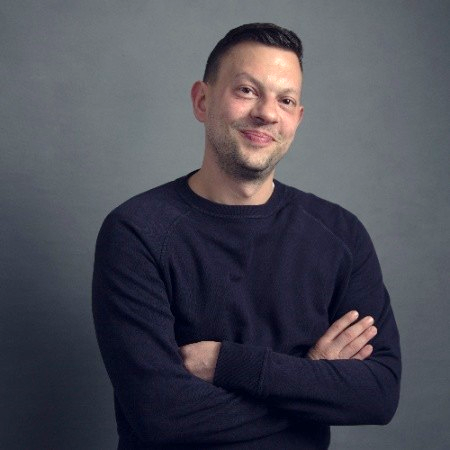 Frangeskides was previously the Data Lead at PHD in the UK. He brings over 10 years of experience in multi-channel planning and buying, data management, analytics and reporting, project management, research and insight development. He has worked with agencies, media and clients, giving him a unique perspective on the advertising industry.
Frangeskides will lead on the client solution portfolio, including Omni, Omnicom’s people-based, precision marketing and insights platform. Both strategic and operational, he will be part of the team working on the business transformation of the group’s clients.
His mission is to ensure Omnicom Media Group’s clients have access to best-in-class marketing products and consultation. These include bespoke analytics, a new multi-touch attribution tool and addressable audience activation.
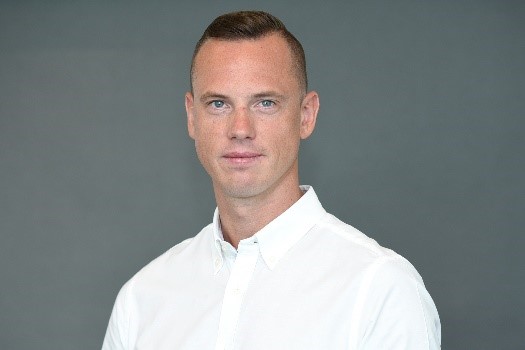 Cherviakov will lead on the transformation of the agencies through automation. These projects will strengthen the group’s current tech stack, with more to follow.
A senior software engineer and a certified ethical hacker, Cherviakov has long focused on making technology work for his clients. In his 15-year career, Cherviakov has worked across varied sectors, including IT, automotive, trade/logistics, oil and gas, and media, in both the public and private sectors.
He delivers IT infrastructures that enable the automation of manual low-value tasks. He also provides tools for comprehensive business decision-making and optimized business processes. His task is to make sure OMG extracts the full value of the data it handles.
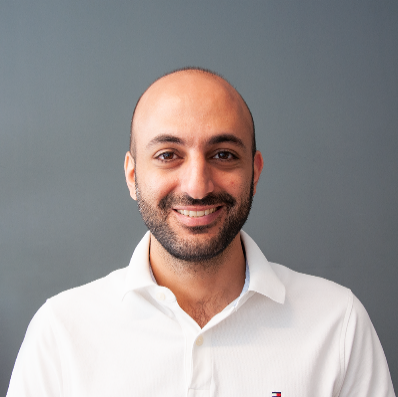 Separately, the holding group has appointed Joubran Abdul Khalek as Head of Performance & Programmatic in its regional hub in Beirut, CORE. He comes from Publicis Media, where he was head of Center of Excellence.
Abdul Khalek has over 11 years of experience in digital marketing, gained across the Middle East and many client sectors. He has a deep understanding of the regional digital landscape and expertise in search, programmatic, tag management, social performance and content. As an ardent tech evangelist, he believes in the power of data.
At OMG MENA’s CORE, he leads more than 30 experts who work on the group’s agencies’ campaigns. His task will be to stimulate his team’s growth and development, as well as their performance, focusing on both talent and product.
OMG EMEA has announced three promotions at the top of its Middle East/North Africa (MENA) operations. The regional CEO, Elie Khouri, has been elevated to chairman, while OMD MENA’s CEO, Nadim Samara, takes the same position at the regional holding and PHD’s CEO Elda Choucair moves to the newly created role of COO.
At Omnicom Group for over 30 years, Elie Khouri has been leading its media division in the Middle East since 2001, when he left BBDO to become a founder of OMD in MENA. In 2006, he assumed the leadership of the newly formed OMG in MENA, following the opening of PHD in Dubai. Over the years, Khouri has stimulated the group’s growth and steered it to a leadership position on a broad range of metrics. In his new role as chairman, he will continue to lead the group’s strategic offering to clients and other stakeholders by fostering closer collaboration with other Omnicom entities. He will also ensure the smooth transition of the executive role to the new management team. Khouri will report to Mike Cooper, OMG CEO for EMEA and APAC.
Nadim Samara, currently OMD MENA’s CEO, will now lead OMG MENA as CEO. At OMD since 2002, Samara has rapidly progressed through the ranks, from planning to analytics and agency management, and across functions and geographies within the global network. He has led OMD’s regional transformation to a data and business performance-focused operation. Samara has also been the architect of its success in new business, innovation and recognition, with OMD being named Media Agency/Network of the Year at multiple award festivals in MENA. He will continue to report to Elie Khouri.
Leading PHD in MENA since 2008 and as its CEO for the last three years, Elda Choucair is one of the top executives in the GCC’s media industry. Under her leadership, the company has grown seven-fold and become a key player in the region. Choucair’s success in creating a future-ready positioning has made PHD a compelling proposition for both staff and clients, recognized by prestigious awards and accolades. She will expand her remit across the group as COO for the holding.
“Our operations in the Middle East are a great source of pride as we lead there on many fronts across our networks and units. In these transformative times, speed, agility and innovation are huge assets and our leadership in this region has amply demonstrated the results of this approach,” said Mike Cooper, OMG CEO for EMEA and APAC. “With this new management structure, we will combine and capitalize on all this energy in order to grow further. We are uniquely placed to realize new opportunities to enhance operational efficiencies and service quality for the benefit of our clients.”
“What makes working in the Middle East so exciting is that there is still plenty to achieve. And with Omnicom’s vision for talent, the growth prospects are endless. I am delighted to be given the opportunity to keep adding value and contribute to further progress in our group and our industry,” Khouri commented. “Together with Nadim and Elda, I look forward to widening our group’s offering, strengthening our values and principles, and shaping our collective future.”
The promotions are effective immediately.
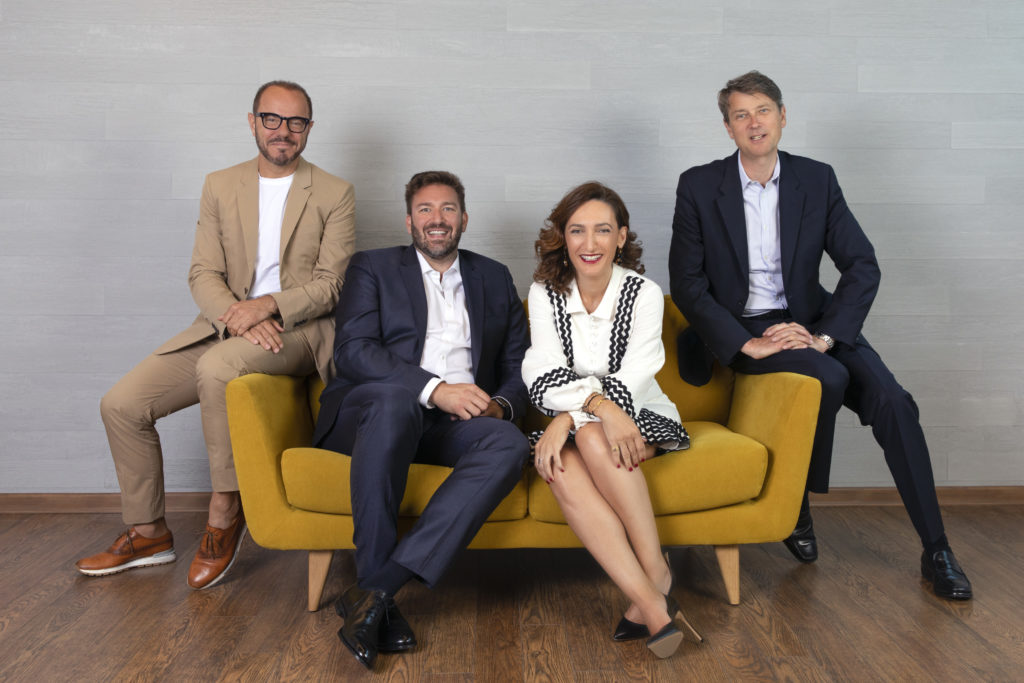 Omnicom Media Group EMEA has announced three promotions at the top of its Middle East/North Africa (MENA) operations. The regional CEO, Elie Khouri, has been elevated to chairman, while OMD MENA’s CEO, Nadim Samara, is promoted to CEO of the regional holding and PHD’s CEO Elda Choucair moves to the newly created role of COO.
At Omnicom Group for over 30 years, Elie Khouri has been leading its media division in the Middle East since 2001, when he left BBDO to become a founder of OMD in MENA. In 2006, he assumed the leadership of the newly formed Omnicom Media Group in MENA, following the opening of PHD in Dubai. Over the years, Khouri has stimulated the group’s growth and steered it to a leadership position on a broad range of metrics. In his new role as chairman, he will continue to lead the group’s strategic offering to clients and other stakeholders by fostering closer collaboration with other Omnicom entities. He will also ensure the smooth transition of the executive role to the new management team. Khouri will report to Mike Cooper, Omnicom Media Group CEO for EMEA and APAC.
Nadim Samara, currently OMD MENA’s CEO, will now lead Omnicom Media Group MENA as CEO. At OMD since 2002, Samara has rapidly progressed through the ranks, from planning to analytics and agency management, and across functions and geographies within the global network. He has led OMD’s regional transformation to a data and business performance-focused operation. Samara has also been the architect of its success in new business, innovation and recognition, with OMD being named Media Agency/Network of the Year at multiple award festivals in MENA. He will continue to report to Elie Khouri.
Leading PHD in MENA since 2008 and as its CEO for the last three years, Elda Choucair is one of the top executives in the GCC’s media industry. Under her leadership, the company has grown seven-fold and become a key player in the region. Choucair’s success in creating a future-ready positioning has made PHD a compelling proposition for both staff and clients, recognized by prestigious awards and accolades. She will expand her remit across the group as COO for the holding.
“Our operations in the Middle East are a great source of pride as we lead there on many fronts across our networks and units. In these transformative times, speed, agility and innovation are huge assets and our leadership in this region has amply demonstrated the results of this approach,” said Mike Cooper, Omnicom Media Group CEO for EMEA and APAC. “With these promotions and new management structure, we will combine and capitalize on all this energy in order to grow further. We are uniquely placed to realize new opportunities to enhance operational efficiencies and service quality for the benefit of our clients.”
“What makes working in the Middle East so exciting is that there is still plenty to achieve. And with Omnicom’s vision for talent, the growth prospects are endless. I am delighted to be given the opportunity to keep adding value and contribute to further progress in our group and our industry,” Khouri commented. “Together with Nadim and Elda, I look forward to widening our group’s offering, strengthening our values and principles, and shaping our collective future.”
The promotions are effective immediately.
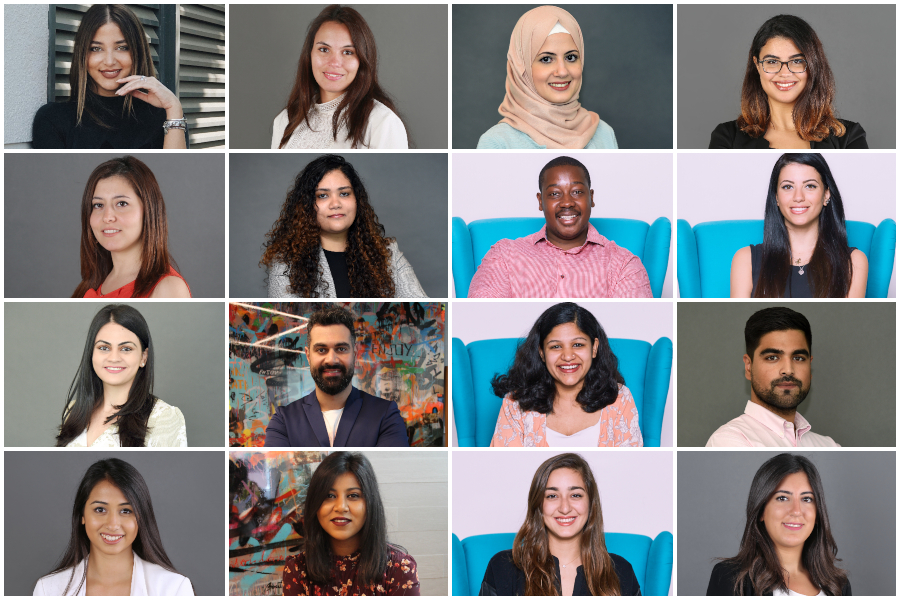
In its annual “Faces to Watch” list, Campaign Middle East highlighted the top talent aged 30 and under that are shaping the industry from the creative, digital and media fields.
Meet the 16 OMGers who were featured in all three lists.
CREATIVE
Layan Sarkis, Art Director, 28, OMD UAE
DIGITAL
Achrafe Mami, Manager – Biddable Media, 30, Hearts & Science MENA
Afaf Zaher, Senior Executive – Performance, 29, OMD UAE
Nour Montasser, Biddable Media Executive, 24, Hearts & Science MENA
Rana Sawma, Senior Data Analyst, 30, Annalect MENA
Sonia John, Associate Director – Digital, 29, Hearts & Science MENA
MEDIA
Brian Zhanda, Manager – Performance, 27, PHD UAE
Christine Isshak, Senior Executive – Planning, 29, PHD UAE
Dimple Dinesh Kumar, Manager – Marketing Science, 28, Hearts & Science MENA
Hamza Madi, Director – Planning, 30, Hearts & Science MENA
Kamala Ram, Senior Executive – Digital Planning, 28, PHD UAE
Omar Anwar, Senior Executive – Planning, 26, OMD UAE
Petal D’mello, Manager – Strategic Marketing Investments, 27, OMD UAE
Pooja Chaluvaraju, Senior Executive – Planning, 27, Hearts & Science MENA
Sahar El Choufi, Manager -Planning, 29, PHD UAE
Tala Saadeh, Executive – Planning, 23, OMD UAE