We all know the adage about fixing your roof when the sun is shining. While recent times haven’t exactly been sunny, there is still a lot we can take from this proverb when we address how we adapt and drive growth for our clients today.
Without using the term ‘new normal’ again, as it has quickly become background noise, it is undoubtable that people’s behaviours have changed and that brands need to acknowledge these new traditions to succeed. Whilst we all immediately became Zoom pub quiz experts, downloaded HouseParty and banged pots and pans on our balconies, these are not long-term shifts that need concern us. Instead, we must use this relative downtime to ask ourselves when we last thought of a brand and why it made us peel our eyes away from our phones? The sunny period is the chance for everyone, and brands especially, to take a breath, understand the situation and uncover the opportunities not just to survive but to thrive.
Most MENA markets continue to suffer economic hardships that make identifying new strategies for growth vital for brands. While some have successfully navigated this, it has become an all too familiar scenario seeing some immediately jump back into churning out exactly what they were doing pre-lockdown. Just ask yourself: Are you behaving the same way now that you did pre-lockdown? I expect the answer is no, so why should a brand go back to behaving in the same way that it did last year?
The effectiveness-versus-efficiency debate rumbles on and the current trend appears to be an even bigger focus on efficiency within the industry. It is natural during economic downturns that marketers will get dragged towards cost-per and ROI metrics; however, there is a danger that too much focus on these could lead to an inadvertent reduction in brand growth. Looking at brands that have challenged and succeeded recently, we often see certain commonalities, namely that on the face of it they appear to be extremely inefficient. Generally, the brands that have challenged the market and seen success have done so by focusing on generating disproportionate attention, rather than being bogged down by campaign ROI. In time these brands have actually become extremely efficient, but that is because they have focused on the outcome first (effectiveness) rather than the methods of execution (efficiency).
So, how do brands achieve this today? Relating back to the notion of fixing your roof whilst the sun is shining, there has never been a greater opportunity to pause and re-assess your brand’s future. If I was to search for one positive from this situation it would be that we’ve had a chance to stop and take stock of what we are actually trying to achieve and think about how our brands can offer customers what they want. Data and technology play two key roles here firstly, ensuring we are capturing actionable customer data; and secondly to uncover invaluable insights on customer trends.
Taking the first point into consideration, it is not only the pandemic that has shifted the goalposts, as we also have Google killing off the cookie and Apple’s Identifier for Advertisers (IDFA) agenda. The relative quiet that we are experiencing with media spends should open the door to brands putting serious consideration into ensuring that their first-party data strategy is set up to capture and engage their audience. We know that e-commerce and screen time continue to grow, but how do we make use of this? Essentially, we need to make sure that our brands are either owning the entire direct-to-consumer (D2C) journey, or as much of it as possible, and that the data architecture is primed to capture everything along the way. Looking at three brands that have achieved success post-outbreak, it is clear that the drive for first-party data has become a key part of media strategy. Starbucks modified its app to allow customers to order before arrival and then pay with contactless. Nike updated its digital ecosystem to include not only e-commerce but also an app dedicated to workout content. Even Heinz, not a traditional player in the D2C arena, launched Heinz to Home boxes, allowing customers to purchase bundles. To the customer this indicates that these brands are catering to their need for convenience; however, they also facilitate the capture of crucial first-party data for brands to listen, learn and activate for business growth.
The second key use of data relates to understanding consumer trends. The most effective brands are those that know how to make the leap and keep up to date on shifts in consumer behaviour. Brands that have spotted and acted on emerging trends have tended to be most effective. Think Burger King with its new spicy menu campaign “Who Said Men Don’t Cry”, tapping into the need for humour, or Guinness’ “Saint Patrick’s Day Message”, harnessing the drive for communal care, or Nike’s “Play Inside, Play for the World” message, which built on the need for unity. These campaigns were all built on data and insight to tap into what people wanted, and they ultimately delivered that disproportionate attention through effective advertising.
The message here is clear: If not now, then when for your brand? We all know that media is a 24/7, fast-paced world, and rarely are we offered such an opportunity to pause and think. The brands that come out of this successfully will be those that have used this time to focus on their data strategies and used data to understand their customers’ needs, not those who revert back to what they were doing before and hoping for the best. Remember, Apple came out of the Great Recession by launching the first iPad; how have you spent the last few months?
This article first appeared in Campaign Middle East.
We work in a complex agency landscape, increasingly populated by boutiques with a narrow focus and the promise of deep specialisation. In theory, a blended model of generalist and specialist agencies should have all bases covered in addressing the ever-increasing range of client needs, driven chiefly by the complex digital and tech space. In reality, devising, matching and managing the right models has become an at-times overwhelming challenge for our industry and, in the search for efficiencies, has become a deeply inefficient beast with implications on us and our clients.
We see agencies tangling themselves in a world obsessed with matching the right structure to the needs of today’s shape, be it matrix, circular or triangular. Clearly, the answer is not black and white and the nature of our industry means that a best-practice standard is unlikely ever to be devised. If our landscape is complex then we owe it to ourselves and our clients to find workable solutions. While we know our promise of deep specialisation has its allure, the real power comes in cross-functional collaboration, integration and a true understanding of the client’s problem.
This is a natural reaction to the increasing complexity of the landscape and tech ecosystem; after all, managing a customer-relationship-management (CRM) and customer-data platform (CDP) is a vastly different skill set to understanding search algorithms or social listening. In this environment, deep specialisation no doubt has its allure, but there is a hidden cost – the power of cross-functional collaboration, integration, and a true understanding of the client’s problem. Instead, our response to the complex landscape needs to be a similarly complex solution, but one contained within a single, accountable, future-focused agency partner.
As we enter a new decade, more businesses are making this shift. At a macro level, we see better integration and collaboration between creative and media as a must-have. At a micro level, niche specialisations are disappearing – pureplay search- engine-optimisation (SEO), retargeting and similar agencies are needing to take a wider view or become obsolete. We are collectively beginning to recognise – or recognise again – the power of an integrated approach, with all the moving pieces in advertising under one roof and working towards a single goal. After all, before the unbundling of the 1980s, this was the approach that worked.
Take the rise of the digital agency. The value proposition 20 years ago was simple – digital is the future, so split out your investment and put it in the hands of an agency that lives and breathes this new reality. As digital normalised and digital buying became just another aspect of media buying, we saw this value proposition pivot – performance agencies or growth agencies became the new kid in town. The message shouted from the rooftops was that if you need a better return on advertising spend, or cost per lead, or cost per acquisition, then hire a specialist. It’s a simple, attractive message that hides a concerning subtext – they will maximise your performance investment, with no accountability for long-term brand building. This is exactly the thinking that Field and Binet warned against in The Long and the Short of It. It’s what Mark Ritson has rallied against in his keynotes on ‘Bothism’. It’s the driver behind Simon Peel’s transformation of Adidas. Yet the implications go beyond the simple either/or, or long-term vs short-term. When we normalise specialisation and give each agency its own remit and KPIs, we no longer have a single agency partner that is accountable for holistic, sustainable business growth.
The most obvious frontline example of this sits with search and the myth of paid search cannibalisation – that is, the idea if you are ranking with organic search then you don’t need to pay for paid search on the same keyword. It’s a claim that typically originates in SEO communities, but now and again takes root with otherwise capable marketers. Where did the myth come from? The optimist in me says that it comes from SEO professionals taking the very real concept of keyword cannibalisation (penalties for targeting the same keyword from multiple sources) and then mistakenly applying it to paid search. The pessimist says that without the paid search agency, SEO ROI goes through the roof, justifying an expanded retainer. The concept itself is flawed, but invisible without collaborative analysis between SEO and SEM. Evidence from OMD internal studies show us that the best business performance actually comes with a unified search strategy – increasing visibility through both paid and organic together.
As another example, we can look at social media. There is absolutely no denying the value of a solid content strategy, and many readers undoubtedly have this in place. We have never-ending conversations about building social media followings and driving social engagement. At the same time, algorithm changes have eroded organic reach to less than 1 per cent – so to maximise your content dollar, you should also be supplementing with paid reach. This is where the lid to Pandora’s box starts to creep open. Who defines the audience – the creative agency charged with content, or the performance agency tasked with optimisation? Who decides on budget allocation – the agency tasked with content, or the agency optimising in real-time? If performance falls apart, where do we need to focus our efforts – content or optimisation?
Truthfully, these questions should be irrelevant. The real question is: “How do we impact business performance?”
In a world where multiple agencies are working independently, it is very difficult to catch sight of the big picture. This is partly a specialisation issue – as in the search example, where a specialist cannot make a judgment call on something which falls outside of his or her niche. It can be an issue of ownership – like the social example; when specialisations overlap, which party takes precedence? What does the other party do when they need to act with one hand tied behind their back? Most importantly, it is an issue of accountability – if each agency is only accountable for their piece of the puzzle, then who is advising on the big picture? Clients need a media agency offering both generalised and specialised insight that spreads the breadth and depth of the landscape. Someone who can handle, juggle, and seamlessly collaborate across disciplines to maximise their brand equity. Someone capable of delivering a media solution that is not just responsible for a small piece of the puzzle, but boldly accountable for the complex whole.
This article first appeared on Campaign Middle East.
Originally published in Campaign Middle East.
The Emirates has long been known as the land of dreams; people of different backgrounds and upbringing from all over the world live, visit, and admire the country’s ethos and vision. The Emirates is a story that narrates the power of the human potential and imagination in driving progress and uniting people under the inspiring principle “the impossible is possible”. Only the Emirates could offer audiences from across the globe a chance to make their aspirations a reality, no matter how ambitious or unobtainable they might seem. The #MarsShot, the unique global digital campaign, invited people across the world to share one inspiring dream for a chance to make it happen.
THE NEED TO DREAM BIG
Since the outbreak of COVID-19, there is a universal longing for positivity with people looking towards social media platforms for new aspirations and inspirational content that act as beacons of hope amid life in lockdown. The Emirates and OMD UAE worked together to marry the right media mix to communicate meaningfully with a very real and impactful message; to dream big and conquer the impossible through an inspiring competition.
THE MISSION
To inspire people across the globe to dream big and incentivize them to participate in a campaign that delivers on a meaningful purpose, bettering the world and inspiring others to do the same.
THE CHALLENGE
The media challenge OMD and the Emirates faced was empowering audiences when feelings of doubt and uncertainty exist across the region and beyond. They needed to offer empathy and act as a guiding star leading them to their personal version of a Mars mission. In addition, they needed to consider the major shifts that have taken place in the way people engage with content since the outbreak of the virus and find a way to differentiate themselves. All the while, inspiring audiences to enter a competition that could lead to having their dreams realized.
THE STRATEGY
A global trend, but particularly pronounced in our markets, social and streaming services achieved double-digit growth in the number of UAE users in the last few months. “While consumers are looking inward and restricting physical world interactions, they are also actively expressing themselves to the outside world through social platforms. Social media is used as an outlet for escapism from an uncertain world. What better way to leave daily worries behind than embarking on a journey to space?”, commented Khaled AlShehhi, Executive Director Marketing & Communications, UAE Ministry of Cabinet Affairs & the Future, Public Diplomacy Office.
Knowing social media usage worldwide has increased by 60% since March and internet data traffic due to surges in video consumption by 40%, OMD instantly understood where they needed to strike. The social campaign consisted of a balanced approach between awareness and performance with two defined stages. An awareness phase that was optimized towards campaign visibility and engagements, and a data-driven re-targeting strategy; where those who engaged with the awareness phase were provided with further details around the entry mechanics and a clear call to action.
Khaled AlShehhi adds, “we chose to work with content creators who offered a valuable story to tell and who wholeheartedly believe in the power of people’s dreams and ambitions. They focused on creating relevant and authentic content centered around people and their dreams”. This is why OMD selected IG stories as their main platform. People are more tuned in when watching IG stories as this is where people showcase a more genuine and authentic side of their personality. Influencers could reach out from their natural environments in their homes without scripts or professional lighting, just influencers and their audiences intimately exploring their genuine hopes and dreams.
Carefully they selected a range of influencers across 3 key groups, including the ‘inspiration and caring’, ‘the genuine and human’, and ‘the experience maker’ to widen their reach to a vast number of dreamers. The campaign also included one key anchor ambassador who embodies the true spirit of the Emirates, who is internationally recognized for his ability to resonate with audiences from all over the world. Kevin Hart was a perfect choice to instill confidence with his bold message to ‘dare to dream.’
LAUNCH SUCCESS
In just a matter of days, the competition saw phenomenal levels of engagement from the UAE. Known for better decisions, faster, OMD was able to pivot quickly; identifying where the message resonated the most, they amplified the focus to the UAE which resulted in a 196% increase in daily competition submissions and 125% increase in daily page follows.
In total, over 75M impressions were generated, over 25M views, a 50M reach globally and 46K Instagram page followers in under 10 days. In terms of organic reach, FP7 McCann reported 230K profile views, with a total of 15.6M reach and 161K stories impressions.
More importantly than this, OMD and the Emirates nation brand saw online conversations move to a more hopeful message, they were able to create a large community of ambitious dreamers, and 3 lucky winners will see their dreams come true, contributing to a nation-wide elevation of pride.
For more information and to learn about the finalist reveal, visit www.MarsShot.ae
From the many changes we have witnessed throughout this pandemic, nothing has had a greater impact on human behaviour and the corporate life than the working-from-home experiment. Everyone has a story from this forced house arrest; whether be it the challenge of homeschooling, Zoom mishaps or family interruptions, the meshing of work and personal hours, the forming of house offices in the oddest places, all the way down to simply being able to manage one’s mental health with everything that goes on in the household. We are now all entering a new age of work as the rules that applied before will no longer hold true; this is the age of flexible talent management.
Unlike my previous COVID-19 Accelerated Changes articles, the implications from the working from home experience are fundamentally greater than looking at them from the perspective of government/corporations, people and marketing. In turn, let us look at the implications from four angles as this new normal evolves to become our new reality:
Tech-fueled changes
A year ago, when someone asked you to use Teams, Zoom, Slack or any other corporate communications platform, chances are you would have pushed back or winced at the sheer thought of change and the need to learn something new. The reality is that corporations have been trying to push these technologies on their workforce for the longest time with very little adoption. Then, COVID-19 came in and we had to become accustomed to working from home and in some cases working from anywhere thanks to these same platforms.
The long-standing change to this tech adoption has yet to be seen, but I am certain that the adoption will now expand and create greater changes to how we view collaboration, meetings, business travel and talent acquisition. Collaboration between teams and countries will be greater than ever, increasing both productivity and innovation. Meetings will be shorter, more frequent, focused and a lot more accessible as commute times are removed and office boundaries are broken down. Business travel will be reserved for the necessary and fortunate. And recruitment will be more efficient with increased project-based roles to support ad-hoc company skillset requirements.
Changes to workplace physical & mental health
What we are witnessing now is a gradual and slow return to offices, yet there remains a small segment of the workforce that is willing or able to come into the office. A big part of this comes from the change in dynamics of the household, with kids remaining indoors and in some unfortunate situations’ spouses being made redundant. Here companies will need to exercise both compassion and flexibility and offer their talent the choice to return or not.
There is also another side to the coin here. Many of us have bunkered in so much over the past couple months that the mere idea of leaving the house and heading to the office has become a daunting task. People have become so comfortable working from home that leaving the house is starting to cause a level of anxiety, whether it be around hygiene and chances of catching COVID-19, or due to the mental health impact of staying indoors and away from human interaction. Companies will need to find ways to convince their talent why working from the office remains to be the ideal working standard or else live with this new normal for a lot longer than need be. To do that there must be an empathetic focus on giving employees the comfort needed that all measures are being taken care of, such as; installing thermal scanners, encouraging the use of masks and applying social distancing, to potentially even having an onsite doctor and counselors to ease the workforce as the return to office continues and the pandemic is over.
Changes to job opportunities & competition
With the rise of working from anywhere, there comes a benefit and a detriment. The benefit is that you could potentially apply to most jobs regardless of the location of the employment. This would mean that one year you could be working for a company in Germany, while your next opportunity could be for another in the US. The detriment, on the other hand, is that competition for your job has just jumped tenfold. Companies will be able to replace talent faster due to the increase in size of contactable talent which could also have a knock-on effect on salary levels. Expect more and more offshoring but this time not of specific functions or departments, but of entire roles and responsibilities.
This means that if you are currently employed the expectation is that you continuously upskill and reskill yourself to remain relevant and competitive in the job market. This should yield a much smarter, determined, and skilled workforce in the future. Only those that continuously reinvent themselves will prosper.
Changes to work-life balance
Finally, and one aspect that I expect will change as talent becomes more flexible, is a change in the work-life balance that we have all been aspiring to. As we work from anywhere, the reward of the small moments around where we are working from will help tip the balance to a more rewarding life. As we work around family, from our favorite cafe or from the beach we will also get to enjoy what we love to do outside work.
This will also have an impact on major cities. Why live in Downtown Dubai and pay the premium when you can get a bigger place (potentially a villa) somewhere in the suburbs of the city and get the same amount of work done. The home will get a major upgrade in the coming years, especially for those settled with children as they aim to focus on what matters when we come out of this pandemic.
Regardless of how you look at it, COVID-19 has opened our eyes to a new world filled with opportunities and most importantly greater focus on where we are going. It has accelerated a lot of things from blockchain to AI/ML, IoT to Cybersecurity and flexible talent management; potentially it has also accelerated our awareness as a species to reconsider what truly matters.
I hope you enjoyed the 5-part ‘Accelerated Changes’ articles as much as I enjoyed writing them. The acceleration doesn’t look like it will be slowing down anytime soon and I look forward to providing more insights as we continue to navigate through this new world.
This article first appeared in Campaign Middle East.
Building upon Omnicom Media Group MENA’s media space support for charities amid the COVID-19 pandemic, PHD Lebanon is adding to the network’s efforts by partnering with the Nusaned Association to further its commitment to supporting communities in need.
Nusaned is a humanitarian, community-based volunteer organization based in Lebanon with a mission to support underserved individuals. The PHD Lebanon team identified how they could make a valuable contribution to this important cause by raising awareness through media, PR, influencer engagement and activations. The communication strategy involves the development of 3 hero programmes; Crops that Yield, Goods in Need, and Roofs that Shield. Together, they shed light on how communities can come together to create security, stability, and economic opportunities for the wellbeing of hundreds of Lebanese people.
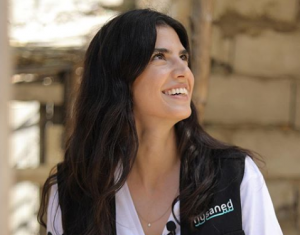
Lebanese actress and director Carmen Bsaibes
In addition, with PHD Lebanon’s help and influencer management guidance, Nusaned has partnered with the genuine and talented Lebanese actress and director Carmen Bsaibes to drive Nusaned’s important agenda. Carmen exemplifies Nusaned’s values of empowerment, sustainability, and creating self-sufficient communities. Beyond the media front, Carmen is actively participating in the on-ground activations, visiting renovated homes, and engaging with the marginalized communities. She has also recently participated in the Nusaned Akkar event while joining hands with the team and the local community in painting the large-scale awareness murals on a popular stairway and wall of Beirut. “Nusaned believes that the power to create change comes from working collaboratively and providing communities with opportunities and tools that create a sustainable living,” stated Ghaida Nawam, Founder of Nusaned NGO.
PHD as a global network is committed to raising millions in donations and contributing to thousands of hours to good causes around the world through its Big Hug initiative. “We are proud and proactive to support Lebanese charities with their projects, to optimize their awareness and their search for help. We look forward to doing more and giving back to our communities during this challenging time,” comments Maroun Hassoun, General Manager of PHD Lebanon. This effort from PHD Lebanon is an example of the great work Omnicom Media Group MENA have been doing amid COVID-19 and adds to the impactful campaigns they have been running with partners to provide complimentary media space to its long-standing partner charities; including Dubai Cares, Gulf for Good and Médecins Sans Frontières.
This article first appeared in Campaign Middle East.
How well defined and meaningfully expressed your brand purpose is will increasingly make the difference with all your stakeholders, says Daniel Shepherd
Remember Bill Murray in the 1993 movie Groundhog Day? As a weatherman sent to cover the annual Groundhog Day festivities in a small Pennsylvania town, he tries to win over a news anchor played by Andie McDowell. Unsuccessfully. Repeatedly. Living in a Groundhog Day. Oddly, aside from the obvious parallels with our lockdown existences, there is a lesson in this tale for business and marketing leaders. One about purpose and what it means for a company or a brand.

While purpose is nothing new, it has gained recent prominence in business leadership circles. Last year, the Business Roundtable – an association of CEOs of America’s largest companies – redefined what it sees as the purpose of business and corporations. For the previous 22 years, its position on the purpose of a company was based on Milton Friedman’s economic theory and the pursuit of profit for the sole benefit of stockholders. Now, it says the responsibility of a business is to create customer value, invest in employees, nurture fair and ethical supplier relationships, and care for the community and environment. While long-term shareholder value still features, it’s no longer the sole yardstick.
A look at the recent entries to the World Advertising Research Center’s Brand Purpose award competition helps in gauging how well businesses are doing with purpose. Entries could be arranged in three piles. The first was for brands that had found a unique insight with a social conscience. The second was for those that sought to bring their brand purpose to play for good in a challenging context. The last pile was reserved for brands that looked at purpose as a band-aid to cover up prior corporate sins.
The winners to this competition came from the first two piles. Brands in the last pile ought to be ashamed and need to take a long hard look at themselves. In the post-pandemic world, whitewashing simply isn’t going to cut it anymore. Trust, which comes from transparency and honesty, has risen to the top of most people’s priority list.
The brands that unearthed powerful and, at times, genuinely moving insights went on to run brilliant campaigns, often around seasonal moments. A lot of entries were related to Ramadan campaigns, the Holy Month being synonymous with charity and a focus on the less fortunate. What they clearly possessed in integrity didn’t necessarily translate into genuine purpose. Being a purposeful brand means having a purpose that runs deeply across the entire organization. It certainly goes beyond an annual CSR campaign, however emotional and beautifully executed.
The real winners are the companies that truly align their purpose with relevant and meaningful causes, such as the UN Sustainability Goals, and adapt every aspect of their business accordingly. Not only do they stand a much better chance of achieving their purpose, they will also convince more people to join forces. The more compelling cases were found in the second pile.
With Covid-19 redesigning our ‘normal’, it’s arguably clearer than ever that we need brands to adopt a genuine sense of purpose. These are not only thriving during the crisis but will fare better when the crisis is successfully addressed. They will shape this new normal everyone is talking about because as much as an observation, it is also a need for a readjustment.
In its book Overthrow II published last year, PHD explored how purpose is at the very core of a new wave of successful Challenger brands. It featured remarkable businesses that propelled their brands into the public psyche with conscience rather than just communications. Purpose comes in a number of different forms, with different goals and at different scales. What makes the truly purposeful Challengers stand out is that their purpose is part of their DNA. It is obvious in their HR policies, their supply chain, their packaging and, of course, their communications strategies.
Purpose isn’t a ‘nice to have’, it’s not seasonal, it’s not a box you tick. It’s not even a response to a crisis. Purpose for brands, like people, is a calling. It’s the reason you get up in the morning and keep going time and again until you achieve what you set out, above and beyond mere profits.
SPOILER ALERT: If you haven’t seen Groundhog Day, Murray inevitably wins Andie McDowell’s character over and breaks the spell. How? He simply had to let go of his opportunistic moves, his crass seduction techniques and cheap chat-up lines. In short, he looked deep within himself, focuses on his real purpose and did the right thing.
Daniel Shepherd is head of strategy at PHD UAE
Launching an app is great. Getting people to use it again and again is a different story altogether. Ayat Mohammed, Media Planning Manager at Hearts & Science, explains how to overcome this challenge.

According to former product leader at Facebook, SC Moatti, “to build products that people love, you have to build products that are extensions of ourselves. Consumers expect that the apps they use will grow and learn alongside them.” It seems simple, right? However, with over 2.5 million apps in the Google Play Store alone, achieving app engagement and retention rates proves to be challenging.
A staggering 37% of users are retained within 30 days of apps in the e-commerce/retail category on average, while 25% of users abandon an app after a single use. These numbers indicate that app creation is relatively easy but developing content to keep users coming back is what leaves brands struggling for effective strategies.
Repeat users directly impact the success of any app – just observe how TikTok has mastered retaining users with addicting content. Keeping users engaged and retaining them are two metrics that reveal qualitative insight into your app’s success. The average person spends 90% of their mobile time on apps, and the reasons for that can vary from the ease of functionality to additional capabilities, in comparison to the web browser. This is showcased across different demographics and markets.
With that in mind, it is no wonder more businesses are turning to apps as a stream to pull their customers to actively engage with their brands. As the app landscape continues to develop, customers’ appetites are maturing along with their expectations. A user’s impression is critical, so learn how to keep them coming back with these four strategies that can be adopted and implemented to capture and retain your audience.
- Focus on the purpose of the app
Yes, all stakeholders are important, but we must remember who the app is serving. The answer will always be the user; without them, you do not have stakeholders. Therefore, the customers are your mobile app royalty and should be the focus. As this is the foundation, identify the value added to the user and ensure the app provides relevant content that upgrades the customer’s experience in real time.
- What does the user want to get out of the app?
Plan out the digital journey and capture highlights from start to finish. A well-designed mobile app should be easy to use for consumers and can quickly provide answers to what they seek with convenience. The idea is to remove barriers and pain points to expand your consumer base. It is important to provide an outstanding mobile app experience that drives customer adoption.
- Set up an agile methodology to measure improvements
Ensure a strong process is established when it comes to reporting and data mining, as this will empower the evaluation and decision-making process. Solid reporting capabilities are critical to capture all the relevant metrics, such as following an agile methodology to ensure an ongoing cycle of improvement for strong adoption and use. Even as mobile app revenues grow, never let your attention deviate from serving the needs of your consumers. Their satisfaction and engagement drive everything – always.
- Relevancy: from push notifications to creative communication
The digital ecosystem as it stands is noisy, and users are opting for ad-less environments such as YouTube Premium. People respond positively to relevant and useful ads while bombarding them with irrelevant content will impact the brand negatively. Empower your digital campaigns with relevant creatives that will pull users, while utilizing push notifications to draw them into the app. Focus on sharing value-added, relevant information/offers to customer segments to keep them updated and coming back. Take it one step further and personalize the app experience with the ability to get users to customize and favorite their products, ultimately creating a seamless user experience.
Push notifications are powerful, but only when the content is helpful and valuable to the recipient. Be careful not to flood it with low-value messages as too many interruptions will encourage consumers to opt-out and you will end up losing a receptive audience that you worked so hard to attract.
This article first appeared on Communicate Online.
With social distancing now prevalent across our daily lives, it has propelled our reliance on technology to new heights via automation, e-commerce, implementation of artificial intelligence, and adoption of machine learning. While it seems convenient in the realms of increasing efficiency and streamlining processes, there is a sense of dehumanization and loss of personal connection with these transformative avenues. This leaves many questioning if it’s only a matter of time before machines completely dominate the field of marketing and the martech industry.
Annalect MENA’s Senior Manager – Business Solutions, Oleksandr Cherviakov, believes that automation will make marketeers stronger, not fewer. In his latest opinion piece for Communicate, he explains that “Most businesses use automation to standardize and structure data and processes to simplify and accelerate them. This is how employees are freed from repetitive, low value, time-consuming tasks.” For marketing to evolve, automated systems are the key to keeping up with rapidly transforming digital landscapes. Looking back, the marketing world in analog was tedious and involved a lot of manual work. As the rise of digital data began to highlight the inadequacy to process the sheer volume of analysis involved for traditional agency structures, the industry needed an overhaul in terms of approach. He elaborates just how automation benefitted the industry since then, “Automated systems powered by a combination of machine learning (ML) and artificial intelligence (AI) extend our reach, push further and dig deeper. Workflows needed rationalization and machines came to the rescue.”
With that being said, how exactly will these digital transformations be embraced within marketing functions in the contactless society we live in today? Read more from Oleksandr as he breaks down just how automation isn’t a threat but an essential accompaniment to today’s marketeer as it allows one to focus on extracting value from data insights which drive heightened connections with consumers. Continue reading his article here to learn more.
This article first appeared on PHD Media.
PHD’s Head of Creative Services, Nawal Nasreddine speaks with our Head of Strategy, Daniel Shepherd, about how to remain ahead of trends on social media, how to inject creativity into your communications and how to strategize so brands can position themselves in the entertainment industry, not the persuasion industry.
Together, the two media specialists discuss the rapid growth of time spent on social media; up by 60% since pre-COVID-19 and how this increase in usage has created multiple fast-paced changes in the industry and the way platforms are used by consumers and brands. Mirroring the surge in activity there has been a dramatic increase in user-creativity which has had a knock-on effect in the world of media. It has never been more important for brands to respond creatively and to structure content strategically in order to be top-of-mind of your consumers.

Social media is a core channel to reach your audience in today’s climate and Daniel asks the crucial questions that need answering about how to plan content and reach your consumers effectively. Nawal addresses 3 key areas including the importance of ‘creativity over relevance’, planning content and a brand’s ‘big idea’ and how authenticity is the new perfect when it comes to content creation in a lock-down.
Find out more by listening to the episode here
Also available on Spotify, Anghami, Audioboom, Deezer and Apple Podcasts.
This article first appeared in Campaign ME.
In the fourth part of his look at the pandemic’s effect on technology, Hearts & Science’s MD looks at how it has accelerated the adoption of IOT, and at the threats, challenges and opportunities this adoption brings.
As cities start to open up, another accelerated change we are witnessing from the pandemic is the impact and application of IoT (Internet of Things). Simply put, IoT is the current interconnected state of devices and technologies that are continuously able to send and receive data between each other. As tasks become more automated, we are continuously seeing more devices enter this ecosystem – now more than ever – as the need to track human movement becomes crucial.
Before we look at the implementation of this technology to Covid-19-specific situations, let us first understand the capability of the technology and how much we rely on it today. In its simplest form, IoT has the capability to connect all your personal devices – your Apple Watch, iPhone, Macbook and Apple TV – so they can continuously send and receive data from one another. Another example is the connected security system devices across buildings linking gate barriers to CCTV to alarms and so on. Or it can be implemented using RFID (Radio Frequency IDentification) tags that are placed on most products to help track them logistically or operationally. The amount of data being collected through these devices is unprecedented, allowing anyone who uses such technology access to a wealth of data never seen before in human history.
When we think of the application of technology during the pandemic, it has been used from the beginning and it will play a bigger role as cities open. Let us look at two cases below:
- IoT Usage at the beginning of Covid-19: At the onset of the pandemic, many countries focused first on tracking the spread of the virus. Countries such as Russia, Singapore, South Korea and Poland relied heavily on IoT and mobile apps to track the spread of the virus to help them reduce the spread and manage the curve.
- IoT Usage in the current situation: As cities and economies start to open up, most companies are relying on smart cameras to help them detect biometric data such as temperature and face ID to help them maintain a Covid-19-free environment. This can be mainly seen now in malls across the region.
The power of IoT is truly boundless as we continue to see the concept develop and evolve into each sector. From autonomous cars, smart homes/offices, wearables, supply chain management, autonomous agriculture… the list goes on. Let us take a deeper look into how this accelerated change can impact government and corporations, people and the marketing world:
Government & Corporations:
The application of IoT in the government sector will ultimately give them more information on their constituents. This can have both a positive or negative impact, resulting in better solutions to taxpayers and residents or greater control and surveillance. On the positive side, IoT will allow governments to respond faster in times of crisis by setting up devices that alert authorities on various triggers. This will result in lower crime rates through greater surveillance with technologies such as facial recognition, services management such as community cooling optimization and infrastructure management with smart vehicles monitoring roads. The solutions are infinite and beneficial as cities move to become smarter.
The same will apply to corporations, and there can be great strides to unlock new areas of growth if they are applied correctly and if companies structure themselves for such developments. The greatest concern around corporations (and governments) implementing more IoT is the role that procurement plays in the vendor selection. If we take the case of installing smart camera systems, opting for the “cheaper” vendor will sometimes open the door for greater cyber security concerns. Most companies are not set up for their procurement departments to understand the risks.
People:
Moving the implications of IoT from governments to people, the main areas that we will all benefit from will be the ability for this technology to grant us all more transparency, convenience, and time saving. From a transparency perspective, as companies implement these technologies such as blockchain, AI & IOT, end consumers will be able to know every detail of what they are purchasing with a simple scan; this will continue to reward companies that are sustainable and deliver value/purpose. When it comes to convenience, think of autonomous vehicles/drones used for deliveries and the likes; this will grant us all the same convenience that ride sharing has – a major shift in behaviour and habits. Finally, and more importantly, when most of our devices start “talking” we will be able to do everything faster and more systematically; think of food replenishment and smart homes, to name a few.
Marketing:
As most technologies affect the marketing world, IoT will do the same and grant marketers more transparent information, more automated functions and faster analysis and decision-making. As devices exchange more information, companies will be able to understand what is selling well faster and make changes to both supply chain and product attributes faster than ever. With such changes, the incoming information can be set up based on the analysis to various triggers that would then start smarter automated processes. Think of your brand’s website speaking directly with a consumer’s device and making the necessary changes to marketing spend, product details and delivery optimisation.
As our devices continue to get more interconnected and generate huge amounts of data, my only hope is that governments and corporations set themselves up to ensure that IoT is being used to benefit the greater good. Granting people more transparency, control and time for them to focus on what matters.

